Yesterday Was a Good Day

Yesterday was a good day. Not the day off I pictured when I took this job (it isn’t an actual day off, but we pretend), but a good day.

When I signed on as the primary caretaker for my granddaughter, the wins were simple. Bottle finished. Burp achieved. Dry diaper confirmed. The job description fit on an index card.

It doesn’t anymore.

Now, a good day means I kept her entertained long enough that she went down for her nap without excessive drama. It means everything ran on something resembling a schedule, because the adults in her life are trying very hard to pretend their lives aren’t a complete shipwreck since she arrived. It means I successfully assessed which objects on her high chair tray were unlikely to choke her, a calculation made more interesting by the fact that God has not yet seen fit to give her teeth.

The surveillance portion of the day is non-negotiable. We walk laps — kitchen, living room, hallway, back to kitchen — while she conducts a thorough inspection of everything that has changed since her last walk. Usually, nothing has changed. She checks anyway.

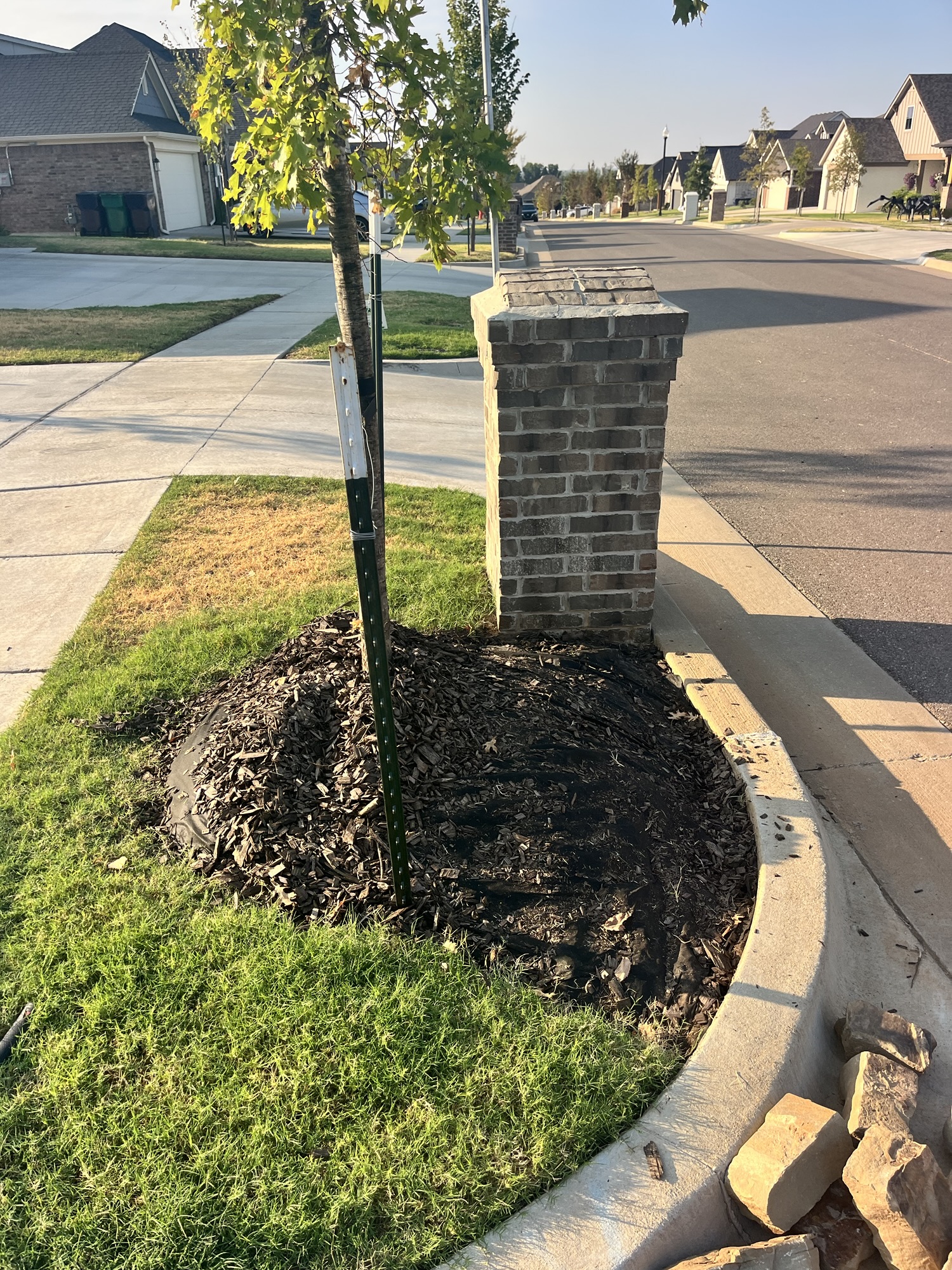
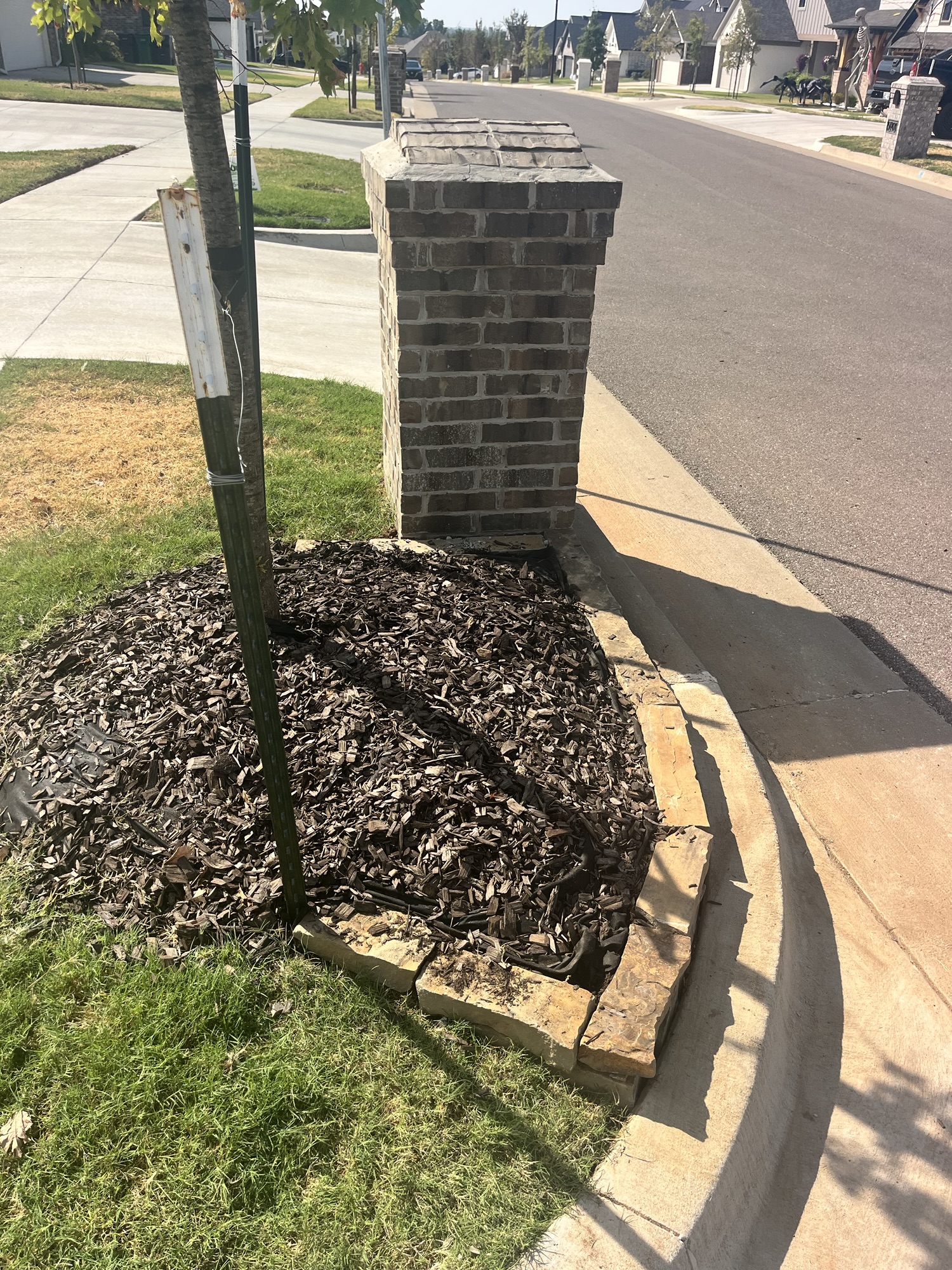
Outside, it’s the mulch. The brown mulch in the flower beds has captivated her in a way I cannot fully explain. It fits perfectly in her little fists. Also in her mouth, which is where most things end up. Her appetite operates on one schedule: eyes open.

A good day also means I timed the diaper change correctly. Change her, set her down in the living room, execute the strategic maneuver of leaving the bathroom door open, and move with purpose. If the math works out, I’m washing my hands when her little crawling body appears around the door frame, just making sure I’m not having an adventure without her.

Then there are the moments that have nothing to do with logistics.

The reluctant laugh — the one where her tummy figures out she’s ticklish before she’s fully committed to the idea. The way she sticks her chest out when you hold her hands, and she leads you, with great authority, to all the important places that require daily review. The diaper bag left unzipped for thirty seconds, which is thirty seconds too long, and the full excavation that follows. She’s looking for something. We don’t know what. It goes in her mouth.

She has also discovered my glasses. There is a game now — I didn’t name it, she invented it — where she removes them from my face with the focused determination of someone defusing a bomb. I’m usually holding her because she’s in a pre-nap mood, which means I’m also the only available entertainment. The lenses are a mess. It’s fine.

There’s also the nap itself, which raises its own question: when she wakes up crying after forty minutes, is she actually awake, or just passing through? The answer determines whether I have time to start dinner. I have not yet developed a reliable system.

The job description has changed, but so have the fringe benefits. She has a personality that walks into a room before she does. The diapers are worse, the opinions are louder, and she has a will that I respect even when it is aimed directly at me.

But I get to watch a little human discover herself. Every lap around the kitchen, every fistful of mulch, every reluctant laugh — she’s figuring out what the world is.

She’s not the only one.

The Self-Appointed Yard Whisperer

This is a further explanation of one of the titles included on my “semi-retired” business card. (Mulch Magician)

My wife was out of town again, which meant dinner was whatever was in the fridge that could survive a second heating. After staring at three containers of uncertain origin, I decided a walk was a better option than food poisoning roulette.

I had an audiobook. I had a route. I had a text out to my son one street over, which he was apparently in no hurry to answer. Fine. I walked.

About ten minutes in, I spotted a couple of women in a front yard — one holding a hose aimed at some trees that had clearly given up, the other supervising from the porch with a German Shepherd on a leash. I crossed the street to say hello, because apparently that’s the kind of person I am.

The dog was skeptical. Her owner told her several times I was fine, then shook my hand in front of her as a formal introduction. The dog considered this, leaned in, and licked my hand. Endorsed. I was in.

What followed was a twenty-minute conversation I had absolutely no business being part of, and yet somehow led.

The trees had been pruned badly — topped, actually, which is basically a death sentence delivered slowly. The grass was Bermuda sod laid in December of 2021, right before they moved in. They moved from Seattle, where watering the lawn is something God handles for free. They waited for spring. Spring, in any meaningful grass-growing sense, never came. They’d tried a series of quick fixes that the yard had rejected with contempt.

I suggested weed mat and perennials for the flower bed. I floated the idea of waiting until fall to deal with the grass. I cautioned them about ordering a truckload of dirt before a rain. I was, by any objective measure, a complete stranger who had wandered in off the sidewalk and was now running a landscaping consultation in their front yard.

At some point I said something like, “I could come help you with some of this.” Then I heard myself. First meeting. Showing up with unsolicited yard opinions is one thing. Showing up with a shovel is how you become a story someone tells later.

Then one of them mentioned they’d found a drug pipe on top of the kitchen cabinets when they moved in.

“That’s not good,” I said.

“We don’t smoke it ourselves,” she said, “but we own a dispensary. So our main question is — what exactly were they doing while they were high in our house?”

Apparently, one of the answers was fixing the door latch — with notebook paper stuffed around the strike plate. High-effort, low-intelligence engineering that you can only pull off when a glass pipe is involved.

My son called during all of this. Then called again. I let it go. He would understand. He’d seen me do this his whole life — stop to talk to a stranger when someone who knows me is technically available. And honestly, I’d just seen him the day before. The women with the dying grass and the drug pipe had never met me. They needed me more.

Toward the end, something clicked. I asked if they happened to be hockey fans. They loved the Kraken (Seattles Pro Team). I told them about the rink just off I-35 south of 240, the boys who live with us, and the extra tickets we pass out to potential fans.

The two of them looked at each other. Nodded. Already knew who they were inviting.

I walked home with no audiobook progress, a missed call from my son, and the quiet satisfaction of a man who had done exactly what he set out to do — even if he hadn’t known what that was when he left the house.

Maybe it was the yard advice. Maybe it was the hockey tickets. Maybe it was just better to talk to absolute strangers than to call someone who’s heard all my material before.

The trees are still lopsided. But I’ve got fans to cultivate.

The “I Do” Adoption

My son is getting married in a couple of months. She is wonderful. She is also from a completely different culture than ours, which means we are all, on a fairly regular basis, figuring each other out.

That’s not a complaint. That’s just the truth.

When your kid gets married, you don’t just gain a daughter or son-in-law. You adopt them. Nobody tells you that when your kid says “I do,” you’re quietly saying it too. The vows are theirs. The adoption papers are everybody’s.

We’ve had our share of “whoops” moments. Some of them are hers. Some of them are ours. I’d be willing to bet that on the occasions where I thought she’d missed something, she had a perfectly reasonable explanation rooted in how she was raised — and I just didn’t know enough to ask. I’ve been married for 35 years. I still miss things. The idea that I’d have it all figured out with someone I’ve known for just over a year is ambitious, at best.

To his credit, my son prioritized pre-marital counseling before any of this got official. Smart move for any couple. For a cross-cultural one, it’s close to mandatory.

My wife is better at this than I am. She is more patient, more instinctively gracious, and far less likely to assign fault before asking a question. I am a work in progress. She has been working on that project for 35 years and will probably need a few more. It took me that long to become even slightly less selfish than I was on our wedding day.

We are, in a sense, the booby prize she gets for loving our son. She knew what she was signing up for with him. The rest of us came with the package.

What I do know is that she is trying. She genuinely loves our son. She has put real effort into being part of this family, even when this family probably made that harder than it needed to be. She’s learning us in real time. So are we.

The grace has to go both directions. Different families have different quirks even when they share a culture. When the cultures are genuinely different, you need more runway, more patience, and a willingness to say “I didn’t understand that — can you help me?” without anybody getting their feelings hurt. We are still building that. Some days are easier than others.

When they say “I do,” we all do, a little bit. We’re agreeing to figure each other out. To give grace before assigning blame. To ask before assuming. To remember that someone who does things differently isn’t doing them wrong.

I’ve needed that same grace extended to me more times than I can count.

Welcome to the family. We’re still under construction, too.

Apology Accepted, Access Denied

I saw this phrase during my morning scroll, and it made me pause. As a Christian, I lean into the forgiving part. The “access denied” part is harder to admit, but I’ve made peace with it — mostly.

I met Jerry (not his real name) through my online business, back when I was cobbling together a living after a post-9/11 layoff and the birth of our 4th child. He was sharp, helpful, and seemed to want what I wanted. That last part turned out to be the problem.

Jerry was one of those people.

Over nearly two decades, Jerry talked me into several business ventures. Some I was smart enough to avoid. Others, I wasn’t. The pattern was always the same — he’d find the angle that sounded like it worked for both of us, and I’d believe him, because he was genuinely convincing. My wife saw it before I did. She usually does.

The last venture was the one that finally clarified things. He connected me with a job through a supplier he knew — Jerry was the manager, and Jerry’s unacknowledged nephew was the chief of operations. The nepotism ran its course, and I was the first to go. Within a week, Jerry called and suggested lunch. He managed to seem apologetic about the fact that he’d had me fired. He also handed me paperwork to sign away my right to unemployment.

My wife didn’t let that stand.

I collected every dollar. I never saw Jerry again.

Looking back, the warnings were there early. Another supplier told me Jerry had dealt with him dirty. I filed it away and kept going. That’s the thing about a skilled manipulator — he doesn’t come at you all at once. He’s a master of the long game. He stays in light contact, patient, until you have something he needs. Then he’s your best friend again.

The hardest part to admit is that I liked him. He was warm and funny and made you feel like the smartest guy in the room for listening to him. I thought I was lucky to have someone like that in my corner. I wasn’t lucky. I was useful.

Now I get occasional Facebook updates. If a customer emails about an order Jerry once fulfilled, I write him a short note. He sends curt replies. That’s what twenty years looks like when one person was paying attention, and the other one wasn’t.

In my mind, the most unbelievable part of the story is that Jerry is now a pastor.

I’ll be honest — I’ve thought about showing up at his church. Not to make a scene. Just to see whether the man preaching from the front is the same one who handed me that paperwork. He has the skills for ministry. He also had the skills for everything else.

But poking around in someone’s life after a three-year gap feels like reopening a wound that’s healed clean. Whatever apology passed between us was probably silent and probably mutual. We moved on. I genuinely hope he’s doing good work now.

I even hope we spend eternity together. I just don’t need to spend any more of my time on earth with him.

The Call That Postponed My Retirement

This is a further explanation of two of the titles included on my “semi-retired” business card. (Dual Format Bookworm and Spousal Support Engineer)

The phone call came two months ago, and just like that, the Summer of ’26 vanished.

It was an offer my wife couldn’t — and, logically, shouldn’t — refuse. A similar role to her current one, fully remote, better pay, working with a well-respected colleague from her past. I wasn’t in the room when she took the call. I heard about it afterward, which is probably how most husbands learn the major plot twists in their lives.

I considered a counterargument. The best I had was “I have over 6,000 books on Kindle and Audible.” Most of them were free. The rest I bought on sale, fully intending to read them immediately. That argument, it turns out, doesn’t hold much water against a high-level role with better benefits. So we pushed the goalposts. Summer of ’29 it is.

To understand why I didn’t put up more of a fight, you have to understand our roles. For 35 years, my wife has been the undisputed Bread-Winner. I’ve made several noble attempts at being a Dough-Winner, but her bread is simply better baked, more plentiful, and has a much more reliable crust.

As we navigated kids, fostering, and a move to Texas, she was the one traveling when the company called. She worked evenings and weekends to make the bosses happy, while I waved from the sidelines — or texted her from the same room to see if she remembered she had a husband. My retirement is technically rock-solid and investment-backed, but it is not the golf-and-slow-coffee variety. It is a series of Supporting Roles. I am the Head of Domestic Logistics, and my CEO just signed a three-year extension.

Here’s the part that gets me. She’ll be home. Physically present, same house, same zip code — and completely unreachable. My wife working remotely is not my wife being available. It’s my wife in a digital fortress with a closed door and four consecutive video calls.

I was hoping to pass the childcare baton this year. Instead, I’ve been re-enlisted. I am currently a specialist in diaper-related hazardous waste management — an unpaid internship with zero upward mobility, but I’m told the exposure is great. By the time 2029 rolls around, our granddaughter will be four and likely helping her mom manage two or more siblings.

Then there are the hockey boys. Another three years of work means another three seasons of high-protein breakfasts and civilized-living lessons. It’s all penciled in. As long as they like toddlers and don’t commit any sins beyond redemption, the house stays full.

So we’re staying in the wind and the Oklahoma heat a little longer. Our local kids will be here at least two more years before their academic pursuits take them elsewhere, which means delaying retirement only adds one year of real extension anyway. I participated in this decision. I agreed it was the right call. My counterargument was weak, and I knew it.

I am a reluctant retiree, but I have people — and one very small person — depending on me most days of the week. I don’t get paid, but that doesn’t mean I don’t get compensated.

I’ll get to those 6,000 books eventually. I just need my wife to retire first.

Almost Okie

Today, an era ended. I officially traded my Texas swagger for an Oklahoma “Okey-dokey.”

I switched my driver’s license.

I walked in, sat down in front of a woman, she looked at my papers, and sent me to the one chair reserved for photos. Barely 15 minutes from entry to exit. Three miles from my house. No app telling me when I was allowed to show up. No line snaking through a building the size of an aircraft hangar.

In Texas, you schedule days out — months if a driver’s test — and pray the system doesn’t go down on your day. If it does, you haven’t wasted a whole day. You’ve wasted a whole day and your will to live. There’s a substation near most Texas neighborhoods for plates and stickers, but for a license? You’re probably driving 25 minutes to the mega-processing center and clearing your calendar. Here, I had the choice of many locations. The office I chose handled everything. One stop. One very efficient woman who probably wished I’d stop complimenting the process.

The guy behind me had his required documents on his phone. He emailed them to the nice lady and they printed them for him. Both methods work. One involves planning ahead. I’ll let you guess which one I prefer.

I did not ace the eye exam. I want to be clear about that. I passed — barely — but I read the “just a line short of blind” line, and apparently that’s good enough to drive. Nobody seemed alarmed. I appreciated their restraint.

They also gave me genuinely useful advice: go for the 4-year license instead of 8, because renewal is free after 65. In Texas, I might have paid extra just to avoid coming back. Here, I almost want to return.


We’ve lived in Oklahoma for almost a year and a half. My wife was still technically on a Texas payroll — with perks tied to her Texas address — which gave us a convenient excuse to keep the fiction going a little longer. When that chapter closed and a new opportunity let her be honest about where she actually lives, the last reason to delay went with it.

So I kept the Texas license. Not for legal reasons. For sentimental ones.

As long as it was in my wallet, I was still a Texan. There’s a low-grade smugness that comes with that, and I hadn’t realized I was addicted to it. I liked our community, our neighbors, the restaurants we knew by heart. Oklahoma has been kind. Oklahomans are genuinely good people. But we haven’t found our Mexican place yet, or our Italian place, or the one spot we’d drive across town for without discussing it first. My wife asked where I wanted to eat recently and I said Chick-Fil-A. She wanted somewhere nicer. Neither of us could name it. That’s the whole problem right there.

The restaurants will come. I know that. My patience just didn’t get the memo.

The real reason I finally made the switch: I want to vote here. We watch Oklahoma primaries and bond issues play out on TV and I have no voice in any of it. I’ve said for years that if you don’t vote, you can’t complain. I meant it. Time to get in the ring.

So now I’m an Okie. Officially. I’ve got the license to prove it, and I only had to squint a little to earn it.

Values Don’t Retire

My wife and I are somewhere in the foothills of retirement. Not even close to the summit. There are still detours on this road, and honestly, we keep choosing them. We could draw a straight line to the finish — coast, let someone else worry about the spring weather.

But here we are, babysitting a ten-month-old and still figuring out health insurance. And I wouldn’t trade it.

Faith Is a Verb

Every time our kids gather around the table, we say a prayer. That’s not a performance — it’s just what we do. Faith comes up again before the meal’s over, usually more than once. We counsel our kids, married and unmarried, on building something with a Godly foundation. But we learned a long time ago that advice requires a listener. Acting on it? That part belongs to them.

We’re conservative Christians. We attend a church that reflects that — not perfectly, but pretty close. Our kids know where we stand. They also know we can’t believe for them. My granddaughter, as much as I adore her, will have to find her own faith someday. Her parents’ belief won’t carry her across that finish line, and neither will ours. What we can do is make sure the example exists. Doing nothing, after all, is the easiest thing in the world to imitate.

The Tangible Stuff

I’m not going to pretend grandparenting is purely a spiritual exercise. My granddaughter needs a babysitter, and I technically have “spare time” — though I’m not sure where I’m hiding it. My wife works remotely, so we tag-team diaper duty in shifts that would make any grandparent proud.

And yes — her job keeps us from raiding our savings for insurance premiums until we hit 65. These aren’t just financial decisions. They’re the quiet argument I make every day to my kids without saying a word: this is what showing up looks like.

Respect Isn’t Political

Everyone has value. The prisoner. The foster kid. The garbage man. We did foster care for six years — that wasn’t a hobby, it was a conviction. The political lines blur for me here. But the bottom line is simple: treat me and my country with respect, and I’ll meet you with kindness. As a Christian, at a minimum, I owe you a prayer. We’re all sinners. Just not all saved.

Generosity Without the Receipt

Could I give more? Absolutely — most of us could, and I’d be a fool to claim otherwise. We give to causes, including our church. Our kids know we give. They don’t need to know the number. The impression matters more than the invoice.

Commitment Is the Whole Game

Marriage is the biggest bet most people will ever place. We’re honest with our kids about it: it’s not easy. It requires two people willing to grow up and reckon with the fact that their decisions now affect someone else’s life, too. We hold an old-fashioned view on this. A marriage with a Christian foundation is simply better, in our experience. That’s not a lecture. It’s just what we’ve lived.

The Promotion We Didn’t Know Was Coming

Somewhere around the time your kids leave the house, you stop being a parent in the daily operational sense and get promoted — if you’re lucky — to trusted counselor. We’re hoping to earn that promotion unanimously.

We weren’t perfect parents. Our advice isn’t flawless either. But if our kids can feel the gist of how we’ve lived — if they’ve seen our convictions match our words, if they’ve watched our marriage hold — then it’ll be hard for any of them to look back and say, “Nobody told me that.”

You were told. You were shown.

We’re not trying to make our kids into copies of us. We’re trying to make sure they don’t walk into the world without a compass. Call me boring. Just don’t accuse me of raising kids who’ll make the world worse. We fought too hard for that. And if they pass something worthwhile to the next generation of Gruenbaums?

That’s the whole point of the journey.

The Sarcasm Sabbatical

When her dad leaves, it’s just the two of us.

She doesn’t cry. She watches the door for a moment, then turns those big brown eyes toward me like she’s decided I’ll do. I reach out my hand and she puts hers in it. Just like that. No negotiation, no hesitation. She’s in.

I don’t deserve that.

Not because I’m a bad person. But because twenty minutes earlier I was mentally rearranging my morning, calculating what I could still get done with her here. A guy who does that doesn’t deserve to have a ten-month-old place her hand in his like he’s the most reliable thing in the room.

If I could summon any sarcasm in that moment, I’d shut it down fast. It has no place there. She wouldn’t understand it anyway, but that’s not why. It’s because sarcasm requires a little distance, a little edge — and she’s handing me something that has none of either.


Sarcasm has been my first language for as long as I can remember. Not the cruel kind — I want to be clear about that. More like a filter. The world comes in, gets processed, and comes out with a slight lean. A raised eyebrow you can hear.

My wife has spent thirty-plus years either appreciating it or tolerating it, depending on the day. My kids grew up fluent. Visitors to our house occasionally need a translation.

It’s not a defense mechanism. I’ve heard that theory. I just like it. It keeps things from getting too precious. Life has enough earnest moments without me adding to the pile.

I’ve never wanted to be the guy who buries his wit in a bowl of warm oatmeal. Still don’t.


Something is happening, though. I notice it in small doses.

She’s been in my life less than a year and the near daily exposure is doing something to my defaults. I’m slower to reach for the raised eyebrow. Quicker to just… be there.

Some of it is age. Some of it might be spring. I’m leaving room for the possibility that July heat brings it back in full force and this whole reflection was seasonal.

But some of it is the memory problem. I ran on fumes through a lot of my kids’ childhoods. Work, dinner, bedtime — repeat. I don’t have the sequential recall I wish I had. Ask me to walk through any one of my kids’ early years in order and I’m zig-zagging between fragments, hoping the effort knocks something loose.

I’m paying attention differently now. She’s clearing her first-year hurdles and I’m watching every one. Maybe that’s what’s crowding out the sarcasm. Hard to maintain the slight lean when you’re actually trying to catch everything.


I want to be clear about something. I’m not trying to shed the sarcasm. I’m not in recovery.

I like those shoes. I like walking through life as the guy with the quick smile and the wit already three steps ahead. It has served me well. It has made hard things bearable and dull things entertaining. My wife knew what she was signing up for. Mostly.

But a ten-month-old with big brown eyes who puts her hand in mine without a second thought — she’s not asking me to change. She just doesn’t leave room for it. The distance that sarcasm requires isn’t available when someone that small is trusting you that completely.

So for now, in those moments, I put it down. Not permanently. Just in the corner, where I can find it when she goes home.


Her mom picks her up and the house goes quiet in a specific way that it didn’t used to.

I don’t immediately reach for the wit. It comes back gradually, like eyes adjusting to light. By dinner I’m probably back to full strength. My wife would confirm this.

But something lingers. I’m not sure what to do with that yet. Maybe nothing. Maybe it’s just what happens when someone tiny and completely earnest spends enough time in your house.

Ask me again in August. If the heat is up and the sarcasm is fully restored, we’ll call it seasonal.

If not, I’ll let you know.

The Gruenbaum Guarantees

We all spent twenty‑ish years under the same roof, breathing the same air, tripping over the same shoes, and negotiating the same dinner table politics. You’d think that would produce six carbon‑copy humans. It didn’t. What it did produce — according to my second son, who has always had a running comedy routine in his head — is a set of “Gruenbaum Guarantees.” Not rules, not traditions, not even expectations. More like… tendencies. Family traits that show up often enough that you start to think they might be genetic, even though the real culprit is probably twenty years of shared kitchen counters and car rides.

Here are a few of the classics.


Pretty Good Banana Bread

If you’ve met us, you’ve probably eaten our banana bread. Hockey boys, exchange students, neighbors, hairdressers, the folks at Leslie’s who tested my pool water — the bread has fans on four continents, which is more than I can say for some of my luggage.

The recipe calls for six bananas, which means it produces enough loaves to feed a mid‑sized village. When the kids were in school, the ratio was six small loaves to one big one, mostly so teachers could get their cut. And if that ratio happened to give me some rounding flexibility, I didn’t complain.

Bottom line: we make good bread, and we hand it out to people we like. Or people we should like. I don’t always check the list too carefully.


We Are Active

This one starts with me, which feels both accurate and slightly unfair to admit. Work flexibility helped. When the kids were young, walking was something I did with intention — part of the time spent praying for people, moving through the neighborhood with actual purpose. Somewhere along the way I traded that habit for audiobooks at 2x speed. The results are shorter-lived but more immediately satisfying. I’m working on feeling worse about this.

Judy’s path was longer. Early marriage meant aerobics and swimming, then injuries and life made consistency harder to hold onto. She’s building it back now, with retirement on the horizon and a swimming and weightlifting routine that runs four to six times a week. She figured out what I already knew: the time to start is before you need to.

The kids took the general idea and ran with it — sometimes literally. Three of them have finished half marathons or longer. When my daughter ran her full marathon, I walked alongside her for a stretch, then finished the course on foot while she pulled ahead at a jog. I stayed well clear of the official finish line. Found her eventually, along with Judy, her husband, and a small crowd of people who had done the harder version of what I’d done. My youngest has entered powerlifting competitions. My son and his fiancé have built their life around walking and yoga.

For the ones where the activity level is harder to gauge, I take comfort in the dogs. Two of my kids have them — my oldest has two in the house — and dogs, whatever else they do, require daily walking. I’ll count it.


We Read

My wife sticks to her genre lane but is rarely without a book on the nightstand. My oldest son doesn’t always have one going, but when he does, the pages smoke. And a perfectly normal question when we all get together is “what are you reading?” or “any recommendations?” — asked with the same casual expectation as asking about the weather.

The Gruenbaums are readers. It snuck up on us, but here we are.


We Clean Our Plates

This one took time. Not every kid arrived at the table as an enthusiastic eater — the crockpot and mashed potatoes were traded for the oven and a near nightly pan of roasted veggies. Adulthood expands the palate. The ratio of protein to greens on our plates isn’t what it used to be, and honestly, that’s fine.

These days there’s almost nothing they won’t eat. My wife might actually be the pickiest one of the bunch, which she would contest on principle.(Her list of “won’t eat foods” is definitely the longest.)

A vegetarian is marrying into the family soon. She is fully welcome. She is also fully expected to clean her plate — though given that she uses more hot sauce in a single meal than the rest of us do in a whole year, I’m not particularly worried about her appetite. The girl commits.

My standard remains: clean plate, and if there’s bread nearby, use it to mop up the juices until the plate is almost clean enough to put back in the cabinet. Almost.


We Are Planning, Going On, or Dreaming About a Vacation

This one is universal. We may not travel every year — pandemics have opinions — but someone in the family is always in research mode. I like a cruise ship with daily excursions. Others prefer hiking destinations that require actual exertion, which I respect in theory.

My wife has planned two land‑based trips to Alaska that never made it out of the planning phase. We did eventually cruise there, so I count that as a win. She does not.

Our youngest is in Portugal right now. Another is in the “let’s give my parents some grandkids” phase, already dreaming of the day travel becomes possible again — ideally with parental support. My son and his fiancée are planning a trip to India after the wedding. And another son is a camper who still jumps at a big trip when the calendar cooperates.

If we’re not packing, we’re planning. If we’re not planning, we’re researching. It’s a cycle. We’ve made peace with it.


At 30,000 feet, we look pretty similar. Even at 10,000 feet, you can still see the family resemblance. But zoom in close enough — the reading choices, the preferred adventures, the way each kid approaches a problem — and the differences show up fast.

I wouldn’t want cookie-cutter kids. And they would revolt if anyone told them they’re just like their dad.

They’re not wrong to revolt. But they’re not entirely right, either.

When we gather, we don’t compare step counts or race times. We talk about books. We talk about travel. And there’s usually banana bread on the counter, waiting for the moment someone decides they have just enough room left for a slice.

Maybe it’s DNA. Maybe it’s twenty years of modeling, nagging, and hoping certain things would stick.

Either way — similar enough to recognize, different enough to keep things interesting.

The Illusion of Travel Control

My daughter’s flight was postponed again. What started as a clean six-day babysitting stint for granddaughter Ellie (and Grandpa Andy) has quietly stretched into eight — and honestly, I’ve stopped checking the flight tracker. When they land in OKC, I will know.

Nobody made a bad decision here. This was a collaborative disaster — a joint venture between Mother Nature, Spring Break crowds, and whatever dark energy the TSA stirred into the blender this year. Credit where it’s due: it takes a village to strand a family.

They were already down badly before the delays started. The baby’s ears hurt, and she wailed the whole first flight. Their Orlando-bound plane got rerouted to Jacksonville due to the weather. At that point, the vacation feeling exits the chat. Their luggage allegedly went to OKC, but actually took a personal detour to DFW and got a motel there. Hotel scrambles. Gate changes. A baby who does not care about any of this and simply wants her schedule honored.

Parenting is a full-contact sport under ideal conditions. Doing it in an airport terminal, without your gear, running on cold coffee and evaporating optimism — the difficulty multiplier goes sideways fast. I’ll retell their specific calamities once they finally drop off Ellie, if they can describe it without breaking into a cold sweat. What I know already would have had me snapping at anyone who got between me and my seat.


We Were Always a “Let’s Get This Over With” Family

My wife and I were never emotional travelers. Survive first, process later — that was always the policy. And somehow, across twenty-something years of family road trips, we processed a lot of flat tires.

We once drove from Texas to Ohio and caught a flat before we’d even cleared Tennessee. AAA swap, plug at a tire shop, McDonald’s to distract the kids with breakfast — standard chaos protocol. We hadn’t even left the parking lot when a second tire quit on us. We ended up in an elaborate multi-mechanic shuffle that eventually got us to Ohio, just a few hours behind schedule and significantly more familiar with local auto shops than any tourist should be.

Then there was the Carolina trip. We spent a night hunting for a hotel on the West Virginia Turnpike, finally falling into bed around 2:00 AM — only to wake up to another flat. The highlight was the tow truck driver who couldn’t fit all four of us in his cab. His solution? Hoist the van onto the flatbed with us still inside. We spent the ride elevated above traffic, waving at passing cars like we were the grand marshals of a very sad parade.

Even cruises weren’t safe. We disembarked in Galveston, ready to head home to DFW for laundry and yard work, when one of our tires embraced a nail with the quiet resignation of something that had simply had enough. We spent the next couple of hours eating Mexican food and watching the Olympics on a big screen while the tire got mended. Honestly? Not the worst afternoon we’ve had.


The Illusion That Makes It Bearable

Here’s what I keep coming back to, though. Every one of those tire stories was ours. We drove into them. We loaded the kids, took the route, made the call — and when things went sideways, we were the ones considering pulling out the jack before remembering our AAA membership.

Granting full trust to an airplane hands all of that to a system you can’t negotiate with. When it breaks, you’re just cargo in someone else’s problem. My daughter couldn’t reroute. Couldn’t drive around the weather. Couldn’t do anything but stand at a gate with a wailing infant and wait for a screen to change.

Yes, they skipped the long haul to Ohio. But when you’re watching the adults hit a wall while trying to keep a baby content in a terminal, those West Virginia flat tires start sounding less like disasters and more like a reasonable trade.

At least when you’re stranded on a turnpike, you drove yourself there. Her parents may need a while before they’re ready to find out if the skies are actually friendly. Ellie, for her part, would probably have been fine either way.