The Pudding Aisle

My daughter and I had a cooking project last Tuesday. She went through my “make these someday” recipe stack, picked her favorite, and we drove to the store to collect what we needed.

I always end up in the pudding aisle.

I’m a pudding voyeur from way back. Pre-COVID, the butterscotch section alone gave me options — store brand, off-brand, multiple sizes. Now it’s just Jell-O, one size, take it or leave it. I leave the chocolate lovers their big box. I don’t need to understand them.

The cook-or-instant question isn’t really a question. Pudding is not meant to meet cold milk in a bowl and get stirred into submission. It’s meant to dirty a pan. It’s meant to thicken slowly while you stand there wondering if you’ve stirred constantly enough to avoid burning it. There’s a small gamble involved, and I appreciate that in a dessert. If you reach for the instant box, you’ve already answered something about yourself.

My daughter — the one I babysit for — has been known to locate the butterscotch box sitting in my cabinet, waiting for someone with patience and standards. I’ll make it for myself if I have to. But knowing someone thinks me worthy of a cooked product is a better feeling than I probably should admit.

Way back when my wife and I were dating, my future mother-in-law bought me a butterscotch pie. To make me feel welcome, I think. She didn’t bake it herself, which, in retrospect, was the correct level of effort for someone who hadn’t decided about me yet. I didn’t make nearly enough of a fuss over it — being a young man of profound emotional stupidity, I offered the bare minimum of gratitude. I’m making up for it now by gatekeeping the pudding aisle. It’s called growth.

I used to make homemade butterscotch pudding too, in the double-boiler era. Every recipe I look at now just says “saucepan.” If you’re currently content with the pre-made plastic-cupped pudding from the refrigerated aisle, I’m not angry. I’m just disappointed.

Many of my taste preferences have shifted over the decades. The butterscotch ones have not moved an inch. They remain loyal, patient, and occasionally indulged.

And I probably shouldn’t mention this, but my granddaughter tried a small spoonful the other day. The look on her face was familiar. I’m choosing to believe it’s genetic.

Yesterday Was a Good Day

Yesterday was a good day. Not the day off I pictured when I took this job (it isn’t an actual day off, but we pretend), but a good day.

When I signed on as the primary caretaker for my granddaughter, the wins were simple. Bottle finished. Burp achieved. Dry diaper confirmed. The job description fit on an index card.

It doesn’t anymore.

Now, a good day means I kept her entertained long enough that she went down for her nap without excessive drama. It means everything ran on something resembling a schedule, because the adults in her life are trying very hard to pretend their lives aren’t a complete shipwreck since she arrived. It means I successfully assessed which objects on her high chair tray were unlikely to choke her, a calculation made more interesting by the fact that God has not yet seen fit to give her teeth.

The surveillance portion of the day is non-negotiable. We walk laps — kitchen, living room, hallway, back to kitchen — while she conducts a thorough inspection of everything that has changed since her last walk. Usually, nothing has changed. She checks anyway.

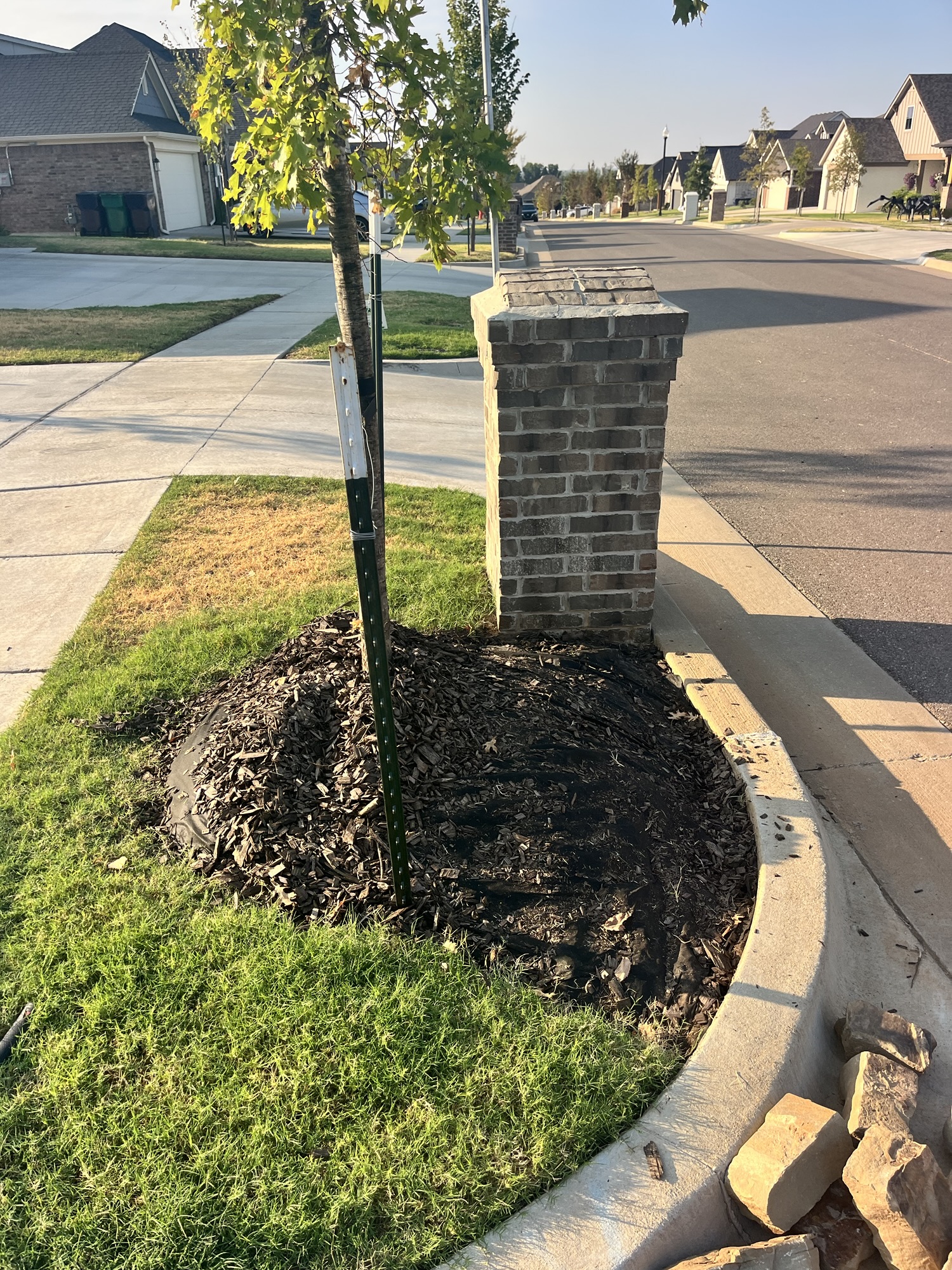
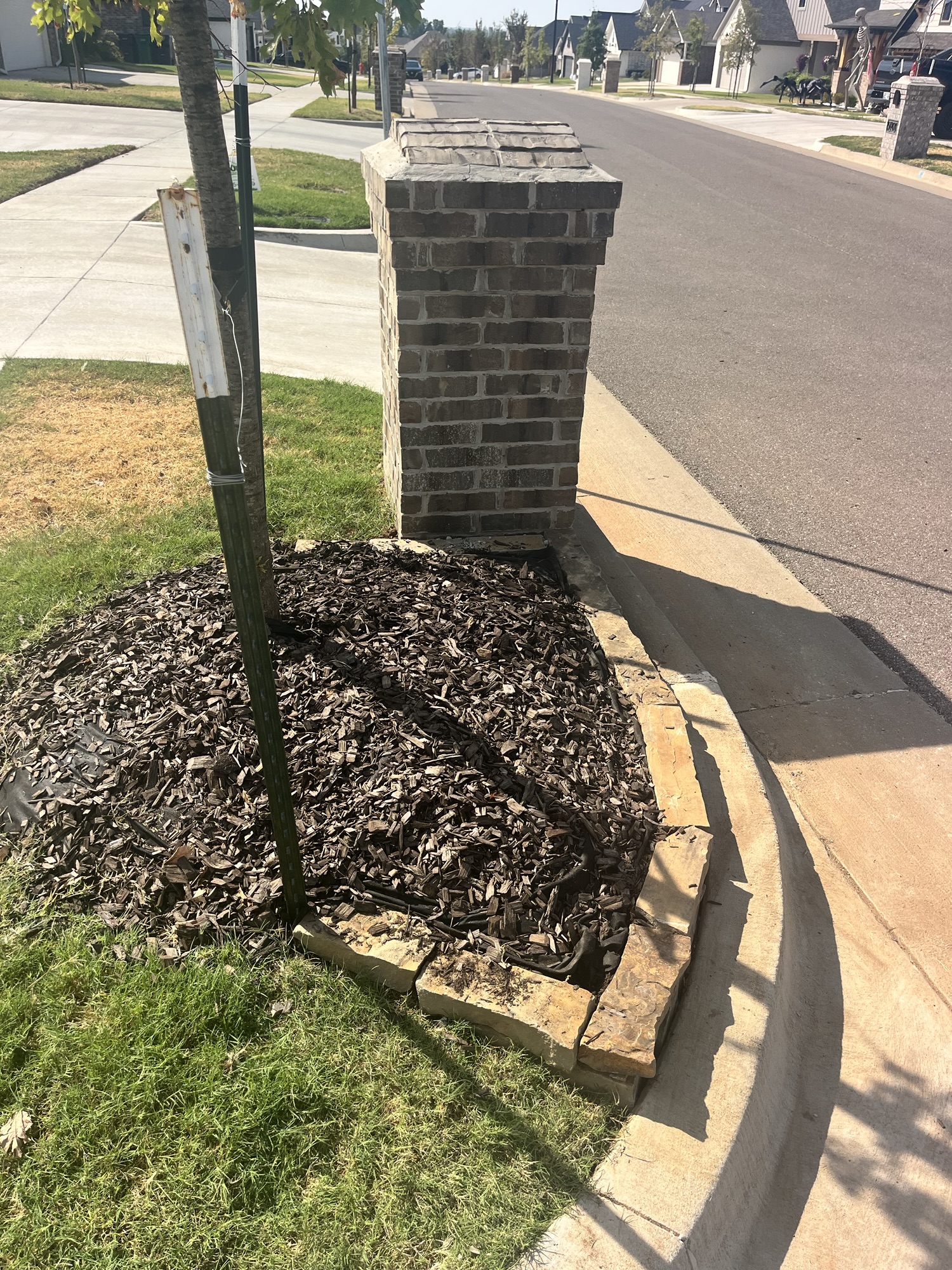
Outside, it’s the mulch. The brown mulch in the flower beds has captivated her in a way I cannot fully explain. It fits perfectly in her little fists. Also in her mouth, which is where most things end up. Her appetite operates on one schedule: eyes open.

A good day also means I timed the diaper change correctly. Change her, set her down in the living room, execute the strategic maneuver of leaving the bathroom door open, and move with purpose. If the math works out, I’m washing my hands when her little crawling body appears around the door frame, just making sure I’m not having an adventure without her.

Then there are the moments that have nothing to do with logistics.

The reluctant laugh — the one where her tummy figures out she’s ticklish before she’s fully committed to the idea. The way she sticks her chest out when you hold her hands, and she leads you, with great authority, to all the important places that require daily review. The diaper bag left unzipped for thirty seconds, which is thirty seconds too long, and the full excavation that follows. She’s looking for something. We don’t know what. It goes in her mouth.

She has also discovered my glasses. There is a game now — I didn’t name it, she invented it — where she removes them from my face with the focused determination of someone defusing a bomb. I’m usually holding her because she’s in a pre-nap mood, which means I’m also the only available entertainment. The lenses are a mess. It’s fine.

There’s also the nap itself, which raises its own question: when she wakes up crying after forty minutes, is she actually awake, or just passing through? The answer determines whether I have time to start dinner. I have not yet developed a reliable system.

The job description has changed, but so have the fringe benefits. She has a personality that walks into a room before she does. The diapers are worse, the opinions are louder, and she has a will that I respect even when it is aimed directly at me.

But I get to watch a little human discover herself. Every lap around the kitchen, every fistful of mulch, every reluctant laugh — she’s figuring out what the world is.

She’s not the only one.

The Sarcasm Sabbatical

When her dad leaves, it’s just the two of us.

She doesn’t cry. She watches the door for a moment, then turns those big brown eyes toward me like she’s decided I’ll do. I reach out my hand and she puts hers in it. Just like that. No negotiation, no hesitation. She’s in.

I don’t deserve that.

Not because I’m a bad person. But because twenty minutes earlier I was mentally rearranging my morning, calculating what I could still get done with her here. A guy who does that doesn’t deserve to have a ten-month-old place her hand in his like he’s the most reliable thing in the room.

If I could summon any sarcasm in that moment, I’d shut it down fast. It has no place there. She wouldn’t understand it anyway, but that’s not why. It’s because sarcasm requires a little distance, a little edge — and she’s handing me something that has none of either.


Sarcasm has been my first language for as long as I can remember. Not the cruel kind — I want to be clear about that. More like a filter. The world comes in, gets processed, and comes out with a slight lean. A raised eyebrow you can hear.

My wife has spent thirty-plus years either appreciating it or tolerating it, depending on the day. My kids grew up fluent. Visitors to our house occasionally need a translation.

It’s not a defense mechanism. I’ve heard that theory. I just like it. It keeps things from getting too precious. Life has enough earnest moments without me adding to the pile.

I’ve never wanted to be the guy who buries his wit in a bowl of warm oatmeal. Still don’t.


Something is happening, though. I notice it in small doses.

She’s been in my life less than a year and the near daily exposure is doing something to my defaults. I’m slower to reach for the raised eyebrow. Quicker to just… be there.

Some of it is age. Some of it might be spring. I’m leaving room for the possibility that July heat brings it back in full force and this whole reflection was seasonal.

But some of it is the memory problem. I ran on fumes through a lot of my kids’ childhoods. Work, dinner, bedtime — repeat. I don’t have the sequential recall I wish I had. Ask me to walk through any one of my kids’ early years in order and I’m zig-zagging between fragments, hoping the effort knocks something loose.

I’m paying attention differently now. She’s clearing her first-year hurdles and I’m watching every one. Maybe that’s what’s crowding out the sarcasm. Hard to maintain the slight lean when you’re actually trying to catch everything.


I want to be clear about something. I’m not trying to shed the sarcasm. I’m not in recovery.

I like those shoes. I like walking through life as the guy with the quick smile and the wit already three steps ahead. It has served me well. It has made hard things bearable and dull things entertaining. My wife knew what she was signing up for. Mostly.

But a ten-month-old with big brown eyes who puts her hand in mine without a second thought — she’s not asking me to change. She just doesn’t leave room for it. The distance that sarcasm requires isn’t available when someone that small is trusting you that completely.

So for now, in those moments, I put it down. Not permanently. Just in the corner, where I can find it when she goes home.


Her mom picks her up and the house goes quiet in a specific way that it didn’t used to.

I don’t immediately reach for the wit. It comes back gradually, like eyes adjusting to light. By dinner I’m probably back to full strength. My wife would confirm this.

But something lingers. I’m not sure what to do with that yet. Maybe nothing. Maybe it’s just what happens when someone tiny and completely earnest spends enough time in your house.

Ask me again in August. If the heat is up and the sarcasm is fully restored, we’ll call it seasonal.

If not, I’ll let you know.

The Voice (Or: How I Learned to Nag Without Technically Nagging)

This is a further explanation of one of the titles included on my “semi-retired” business card. (Reminder Wrangler)

Somewhere after the last kid left for college, I developed a second voice.

Not a concerning one. Not the kind that tells you to do things. More of a guest narrator. A color commentator for the small, unresolved frustrations of domestic life. Specifically, my wife’s share of them.

It sounds exactly like my wife. Except sassier. And with slightly more self-awareness than she’d probably volunteer on her own.

Here’s how it works. The dishes pile up. Judy is, by longstanding treaty, the designated dishwasher. When the stack starts achieving architectural ambitions, I don’t say anything. I just wander past the sink, tilt my head, and murmur — in a voice that is not quite mine — “I wonder when the dish fairies are coming. You’d think they’d have been here by now.”

She knows exactly what’s happening. She’s been married to me long enough to read the subtext, which is: the dishes need doing. The Voice is just the delivery system. It’s a nag wearing a disguise, and the disguise isn’t even that convincing. But somehow it lands softer than the direct version, and we both know it.

The lamp incident lasted several months. We had a lamp behind the chair. The recliner ate its cord. I asked about a replacement — once, twice, roughly fourteen times over what felt like a minor geological era. When I finally deployed The Voice, it came out as: “Boy, I wish I could remember to buy that lamp. Andy hasn’t mentioned it today, so I guess he doesn’t want it anymore.” She smiled. She did not immediately buy the lamp. But the smile was acknowledgment, which is honestly most of what you’re after.

Then there was the peanut butter and jelly incident. These are the ones that make me regret The Voice’s existence.

I had made warmups — real food, intentional food, food that required actual effort and lived in the refrigerator with the reasonable expectation of being eaten. Judy opened the fridge, considered her options, closed it, and made a peanut butter and jelly sandwich. I watched this happen in real time. I said nothing in my own voice, because my own voice would have had an edge to it that the situation didn’t technically warrant. So The Voice showed up instead.

“I know there are perfectly good warmups in there,” it said, with Judy’s cadence and Judy’s calm, “but the peanut butter and jelly is really speaking to me today. And honestly — Andy probably won’t even notice. He loves to throw uneaten food away.”

She laughed. I felt seen and also slightly ridiculous, which is more or less the emotional signature of a successful Voice deployment. The warmups, for the record, were eventually eaten. By me.

The bedtime reading situation is its own category. We both read before sleep. When she stops first, there’s an announcement — delivered with genuine tenderness but also the logistical clarity of a boarding gate closing — that I should probably wrap it up soon. When I stop first, I roll over and go to sleep. If I’m feeling spirited, I’ll glance over my shoulder and say in The Voice, “Don’t read too long, you know how it keeps me awake,” then pull the covers up with the serene expression of a man who has made his point.

I get sassier as the day goes on. Judy has documentation. By 9 p.m., The Voice has loosened up considerably and is operating with real creative confidence.

My wife is a kinder spirit than me — she has accepted this fully. Not just tolerated it. Accepted it. She even has her own version of my voice, which she deploys occasionally. Her renditions are, I will note, significantly more complimentary than mine. Her version of me seems to be a wiser, more generous person. I’m not sure who she thinks she married, but I appreciate the optimism.

Her responses track pretty cleanly to guilt level and degree of offense. Snoring gets a genuine “I’m sorry.” The dishes get something like, “They are piling up — I wish the dishwasher would come back from vacation.” The lamp gets a smile and a “Yes, I should get to that,” delivered with the calm of a woman who has decided to manage me rather than fight me.

The honest version of what The Voice is doing is this: it’s nagging with the volume turned down and a laugh track turned up. It keeps us from having the same conversation with teeth in it. After enough years of marriage, you develop these little systems — ways of saying true things without making them into a confrontation. The Voice is mine. It is weak camouflage. She sees right through it every time.

And she still seems pleased she married a sassy husband — which, after all these years, I’ve decided to take as a win.

The “Same Dress” Dilemma: A Hockey Jersey Saga

In the high-stakes world of hockey, your social standing isn’t determined by your bank account or your personality – it’s determined by what you wear on your back. As a billet parent with my largely non-hockey brain, I’ve learned that jerseys (or “sweaters,” if you want to sound like you know where the locker room is) are the ultimate status symbol.

If you’re wearing the jersey of a legend, you’re a god. If you’re wearing a “so-so” player from a “so-so” team, you’re a poser. These are the rules. I didn’t make them; I just live in a house full of sweaty equipment and try to keep up.

The Seasonal Rainbow of Fabric

In junior hockey, there are two normal ways to acquire these holy grails of nylon:

  • The Auction Gauntlet: The team releases specialty jerseys for every possible occasion – Halloween, Military Appreciation, St. Patrick’s Day. If there’s a holiday, there’s a jersey. This weekend, it’s St. Paddy’s. The team colors are orange and black, so naturally, they’ll be playing in bright green. After the Saturday game, the “Popular Kids” see their jerseys go for a mint, while the newbies’ jerseys hit the minimum bid and hope for a pity-purchase.
  • The Billet Buy-In: At the end of the season, for a cool $250, we get first dibs on our player’s jersey. It’s like buying a graduation gown, but with more Gatorade stains.

The Top Prospect Jackpot

Then there’s the rare third way: The Gift. Our resident “Age-Out” player recently went to a Top Prospects tournament – a speed-dating event for scouts. Except nobody’s getting a rose, just a handshake and a business card. After the tournament, he told me he’d give me his jersey from the bottom of his locker. Frankly, I didn’t think I’d ever see it.

The other day, he came home, looked at me, and said, “I have a surprise for you.” He produced a jersey that can only be described as a sentient yellow traffic pylon.

I was thrilled. I asked the important question: “Does anyone else have this?” He told me only one other existed, and it had been auctioned off to a Super-Fan who owns 35+ jerseys and supposedly writes them off as a business expense. (He’s a recently graduated teenager; I didn’t grill him on the intricacies of the tax code, though I’m curious which IRS category covers “Luminous Athletic Wear.”)

The “Who Wore It Better?” Showdown

I washed my new prize and headed to our seats in the top row. (Pro tip: The top row is where the heat rises and the beer-spilling traffic can’t block your view.)

I scanned the crowd, like I had won something, until I looked to my left. There he was. The Tax-Write-Off Titan. He was wearing The Dress. We were identical. Two bright yellow beacons in a sea of orange and black. I looked at him; he looked at me. It was the classic “Same Dress at the Prom” nightmare, only with more ice and fewer corsages.

The Vanishing Act

Suddenly, he was gone. End of the first period? Vanished. Start of the second? Still missing. I had one theory, and it was solidifying fast: he couldn’t handle the competition. He’d seen me – the amateur billet dad – rocking his exclusive investment, and he’d retreated to the concessions to lick his wounds.

As it turns out, I’m not that intimidating. My player later told me the guy actually tracked him down to get a photo together. Apparently, he wasn’t offended; he just didn’t want us standing too close and accidentally directing traffic toward the goal.

So I’ve kept my status. I’m not a poser anymore. We’re not rivals. We’re not even a coincidence.

We’re a construction zone.

The Head Wag

The whole family has been captivated lately by Ellie’s newest trick. As she prepares to trade crawling for the brave new world of walking, we are bracing for an onslaught of milestones. But for now, we are obsessed with the “Head Wag.”

It started a few weeks ago: a rhythmic, sideways nod that defies easy explanation. To the limited comprehension of the adults in the room, the cause remains a mystery. However, Ellie is a generous performer. If we provide a bit of encouragement—usually by making fools of ourselves with our own awkward head wags—she rewards us with an encore. Sometimes, just a sideways glance and a smile are enough to trigger that little face into motion.

In some cases, the “why” is obvious. In others, it’s a total enigma. Is she defragmenting her hard drive? Is she locking a memory in a little tighter, giving it a shake to ensure it doesn’t leak out of her ears?

That serpentine tongue is occasionally hard to explain, but I find myself wondering about the construction project currently happening behind her eyes. What steps does a baby’s brain take to become the adult brain that has to keep her entertained for the rest of her life?

This quirk isn’t happening in a vacuum. She is zooming through her first year, leaving the adults in a state of perpetual amazement. Our days are filled with a chorus of, “Where did that come from?” and “Did her mom do that?”

Our grandparenting journey will only get more crowded as the family grows. My hope is to catalog these individual quirks while holding onto the memories of what they all share. Perhaps, eventually, we’ll realize they aren’t “quirks” at all—just the universal language of babies being babies. My front-row seat might not be as high-octane as a Saturday at the hockey rink watching our boys, but it keeps me absolutely riveted to the adventure.

The Grocery Store Socialite (or: Life Outside the Crib)

Yesterday, I lived the dream: a day where I wasn’t the primary grandparent. I wasn’t exactly “off the clock,” but I wasn’t fully “on” either. After attempting a morning hug from my grandchild—who is currently in a “what can I destroy next?” phase—I set out on my mission.

My goal was simple: complete the tasks that are nearly impossible when you’re tethered to a baby who demands naps in a stationary crib rather than a moving car seat. The list was short: test the hot tub water and grab a few groceries.

The Schedule vs. The Social

I had a tight window. The pool store didn’t open until 10:00, and I had to be back by 11:30 so “The Substitute” (Grandma) could get to the rec center to swim her laps.

I walked into the pool store feeling confident. I’d recently drained and refilled the tub, so I expected the chemicals to be perfectly in range. With my ego intact, I turned my attention to the attendant. She looked familiar, but the math wasn’t mathing.

“Did you color your hair recently?” I asked.
“Yes,” she replied, “I’m doing some revamping.”
“Aha,” I said, “You looked familiar, but it wasn’t quite fitting together. Good luck with the revamp!”

One interaction down. Quota started.

The Walmart Odyssey

Next stop: Walmart. My grocery list was a digital patchwork cobbled together over several days of “nap-rule” captivity. I wandered the aisles like a tourist, visiting the back, the front, then the middle, taking several unintentional detours along the way.

When it came time to check out, the self-checkout lanes were packed. I opted for an “old-fashioned” lane—the kind where a human being is responsible for knowing the produce codes so I don’t have to.

Since it’s March in Oklahoma, conversation naturally turned to the local religion: Tornado Season. We talked about how our weathermen are a bit… intense. They love to preempt every TV show to tell you, “If you are in the path, for gosh sakes, get in your safe place!”

The cashier weighed in with the classic Okie philosophy: “Don’t worry about the weather until you need to worry about the weather. The drama is for the ratings.”

The Technical Difficulty

Then came the payment. I use a Venmo debit card that has developed a stubborn personality. It refuses to function unless I physically bend the card and lean it into the sensor at a precise angle. It’s a ritual, not a transaction. On the second attempt, the sensor accepted my sacrifice, and I was cleared for exit.

The cashier had bagged my items with a very specific logic: if I had two of something, they shared a bag. Everything else got its own solo apartment. As I looked at the sea of plastic in my cart, I thought, Yep, that’s a lot of groceries.

I headed for the door, receipt held out like a peace offering for the “Klepto-Gestapo” greeters. The coast was clear. I sailed out.

The Parking Lot Pursuit

I was halfway across the asphalt, trying to remember which row I’d parked in, when I heard yelling behind me. I ignored it at first—until I was “assaulted” by a Walmart employee providing their “famous” parking lot delivery service. (Translation: If you leave half your stuff at the register and we catch you before you hit the main road, we might try to bring it to you.)

I sheepishly thanked him while he tried to catch his breath.

The Verdict

I know what you’re thinking: I need to do a better job of keeping track of my groceries. To do that, I’d have to stop having so many conversations. I’d have to stop asking about hair color or debating weather ratings.

But do I actually want that? Probably not.

I can live without the occasional bag of discounted garlic bread or the raspberries for my yogurt. But I can’t live without the connection. I’ll be back to “talking” to the baby shortly, and since she mostly just wants to destroy things, I had to get my talking quota out while I could.

The Ellie Effect

Being a grandpa to a granddaughter who’s still measured in months is not a role for anyone who enjoys a slow pace. Ellie is almost nine months old, and she’s developing so fast that last month’s toys are basically wall décor. Her mind is making these huge leaps, and the adults in the house are scrambling to keep everything one step safer than it was yesterday. We never know when the next mental or physical jump is coming, only that it’s coming sooner than we think.

Right in the middle of our living/playroom sits a table that has become Ellie’s personal stage. It’s the perfect height for a pre‑walker with ambition. She’ll grab a hand, a toy, or just her own determination to hoist herself upright. Once she’s standing, her eyes sweep the surface like she’s conducting a security inspection. What can I reach? What belongs to me now? Does that orange thing look like it might taste good?

I used to think she was studying the objects. Now I know she’s studying us. She’s calculating whether she needs to stretch a little farther — and whether we’ll stop her before she claims something she shouldn’t.

For the past few weeks, my wife and I played a ridiculous game of “table shuffle.” Candles, screwdrivers, pens, coasters — anything remotely interesting or dangerous — got nudged from one side of the table to the other depending on where Ellie approached. We convinced ourselves this was a strategy. Really, it was two adults procrastinating while a baby outsmarted us.

Eventually, we surrendered. The table was cleared. A clean slate. A blank canvas for Ellie’s daily experiments. Every morning when she arrives — and I’m with her 25 to 30 hours a week, so I’ve seen this show plenty — we scatter her growing collection of pre‑toddler toys across the surface. Her eyes light up as her fingers make contact with whatever object she has decided she must possess. It’s her stage, and we’re the stage crew.

But the table era won’t last forever. I got a preview of the next chapter the other day. I was helping her walk — hands in mine, feet doing that determined little stomp — when she stopped at the bottom of the stairs. She planted her feet, put her hands on the first step, and looked all the way to the top like she was sizing up a mountain she fully intended to climb.

That’s when I realized it: the Ellie Effect isn’t slowing down. As she gets stronger and braver, the house will get safer for her and a little less convenient for the rest of us. And honestly, that’s fine. She’s not going to savor this moment for long, and neither should I. She’s training for her next adventure. I’m just lucky enough to have a front‑row seat.

Big Bones and the BMI That Never Stood a Chance

My mother always had an explanation ready for why I never fit the BMI chart. She didn’t need science or statistics — she had something better: maternal confidence. She’d look at me, shrug like it was the most obvious thing in the world, and say, “You just have big bones.”

That was her entire medical opinion. No copay required.

And honestly, she wasn’t wrong about the spirit of it. I’ve never fit the chart. Not as a kid in a small Christian school where the gene pool was basically a puddle. Not in the country high school where the puddle got wider but not deeper. Not even after Basic Training, when I briefly achieved the closest thing to “normal” the BMI would ever allow.

My job growing up was simple: be big, look athletic enough, and protect my brain from whatever forces were trying to keep it from reaching its potential. After Basic Training, the weight came back like it had been waiting in the car the whole time. It’s been remarkably consistent ever since. My clothes from years ago still fit. My doctors have stopped giving me the “you should lose some weight” speech. At this point, my body is about as predictable as my electric bill or my bedtime.

Somewhere along the way, I realized that not fitting the chart doesn’t mean something is wrong with you. Sometimes the chart just wasn’t designed with you in mind. Sometimes the chart is wrong. Sometimes the chart needs to mind its own business.

Everyone has something that knocks them out of the norm. Mine just happens to be visible on a scale. Yours might be hiding in your personality, your habits, or that one hobby you don’t tell people about until you know them well enough.

These days, my attempts to lose weight fall into the “sure, why not” category. Occasionally I even “sympathy diet” with my wife when she decides she likes food more than me — which isn’t true, but chocolate is a close second. Mostly, though, I’ve learned to lean into the areas where I can be judged on merit instead of metrics created to make everyone feel like they’re supposed to fit into the same box.

I’m not my BMI. I’m not my weight. I’m not even my mother’s “big bones,” though I’ll admit the line has aged surprisingly well.

So no, I don’t fit the chart. I probably never will. But the chart never really knew what to do with me anyway.

Grills, Grandkids, and the Smoke Detector Saga

The Great Grill Misstep

Last night started innocently enough: we grilled up a feast of brats, hamburgers, and some andouille sausage. As usual, after taking the meat off the grill, I cranked up the heat to incinerate any lurking germs. It’s my personal version of a germ exorcism. Normally, I remember to turn the grill off afterward. Normally.

Fast-forward 18 hours. I’m feeding my granddaughter a bottle, gazing out the back window like a serene caretaker, when my brain suddenly asks, “What are those heat ripples coming off the grill?”

Cue the realization.

I stepped onto the porch, and it hit me like a ton of bricks: I never turned the grill off. The gas knobs were still wide open, and when I lifted the lid, I was greeted by a mountain of white ash. My grand plan to “clean it later” was quickly followed by a mental debate: Do I tell my wife about this? Spoiler alert: keeping secrets isn’t my strong suit.


Smoke Alarms: The Plot Thickens

Barely an hour later, with my granddaughter swaddled and happily snoozing in her crib (a rare victory in our new “Grandpa’s 30-hour-a-week daycare” schedule), I finally sat down at my computer. That’s when it happened. The smoke detectors went off.

At first, I thought, Oh no, not this again. A few months ago, we had a smoke detector malfunction, and the screeching symphony was unforgettable. Hoping for a quick resolution, I checked the baby—still sound asleep—and sat back down.

Then the alarms screamed again.

The baby stirred, letting out a pre-nap protest, while my heart sank. Time to play Smoke Detector Roulette. Armed with a ladder, I started disconnecting units. Which one of the seven is the ringleader? Who’s the boss of this noise parade?

Two attempts later, I finally silenced the screaming. Relief washed over me. Then paranoia set in: What if this wasn’t a malfunction? I rushed to check on my granddaughter. No signs of carbon monoxide poisoning. She woke up soon after, demanding bottle number two, blissfully unaware of Grandpa’s mini heart attack.


The Reconnection Gamble

Once the baby was settled, it was time to reconnect the smoke detectors. Hooking them back up wasn’t the hard part—my fear was that one rogue detector would throw a tantrum in the middle of the night. And let’s be honest, my “middle-of-the-night hugs” are more like aggressive shoves.


Theories and Lessons

So, what triggered all this chaos? My best guess is that the unvented grill might’ve released something the detectors didn’t like. Or maybe it was dust. Or humidity. Or, let’s face it, the universe just wanted to spice up my day.

Whatever the cause, I’d like to file a formal request with the smoke detector gods: next time, can you schedule your shenanigans around the baby’s nap?


In the end, I learned two things: always double-check the grill, and never underestimate a smoke detector’s ability to keep life exciting—even if it’s at the worst possible moment.