Fireworks, Vacuum Bags, and the Woman Keeping Me Semi‑Functional

I asked my son if I could borrow his vacuum packing bags, and for about ten minutes I actually believed I’d been handed a personal black hole. Suck the air out, and my “will it be cold or warm in the Baltics?” wardrobe folds down into something almost manageable. The clothes really do take up less room. What the bags also do is create a small mystery, because somewhere in there is a version of me who decided a swimsuit and a fleece belonged in the same airtight tomb, and I have zero memory of making that call. Judy gets to unpack the evidence on the cruise and reverse-engineer my packing logic like a forensic scientist of poor decisions. The answer to what I was thinking is, frankly, none of my business.

The morning after the 4th, our trash cans and the neighborhood port-a-potties were all flat on their sides, and none of them were drunk. They just lost a fight with the wind, the same wind that knocked out some power for good measure. One of our cans apparently sacrificed itself against the downspout to keep one of my roses standing, and I’ve been considering a small ceremony for it. Standing in the yard afterward, looking at the mess, I remember thinking this seemed like exactly the right week to leave the country.

Somewhere in the last week I also had to have an honest conversation with myself about cake. I’m a cookie and brownie guy, through and through. Some of the women in my life still like to bake cake, and it’s good cake, thoughtful cake, and I will eat exactly one piece and never come back for seconds. I haven’t found a way to say this out loud without sounding ungrateful, so for now the plan is something like, “This is delicious, but I’m staying loyal to my first love.” If that doesn’t land, I may just start cutting brownies into circles and calling it diplomacy.

Then there’s the cookout math. Hosting a vegetarian and not ending up with a fridge full of regret takes a real system. Don’t make excess to begin with. Freeze what’s left if you do. And if the day after you leave happens to be trash day, empty the fridge like you’re turning in a rental car, no evidence left behind. With Judy already gone a few days ahead of me and my own appetite in no hurry to expand, I’ve been running rules two and three on a case by case basis, like a one-man Supreme Court of Leftovers.

We also got the house ready for a couple staying with us one of the weekends we’re gone. We’re not running an Airbnb, so nobody’s expecting turndown service. Make sure the AC works, keep something cold and non-alcoholic in the fridge, and accept that the only bed built for two people in this house is staying off limits, no exceptions. The two downstairs beds, formerly belonging to our kids who’ve moved on to careers and bigger things, will do fine. My only real hope is that they remember to turn the thermostat back up when they leave — there’s a whole system of checks and balances built around that one, and I’ll probably forget most of it until the electric bill shows up and I gasp in three languages.

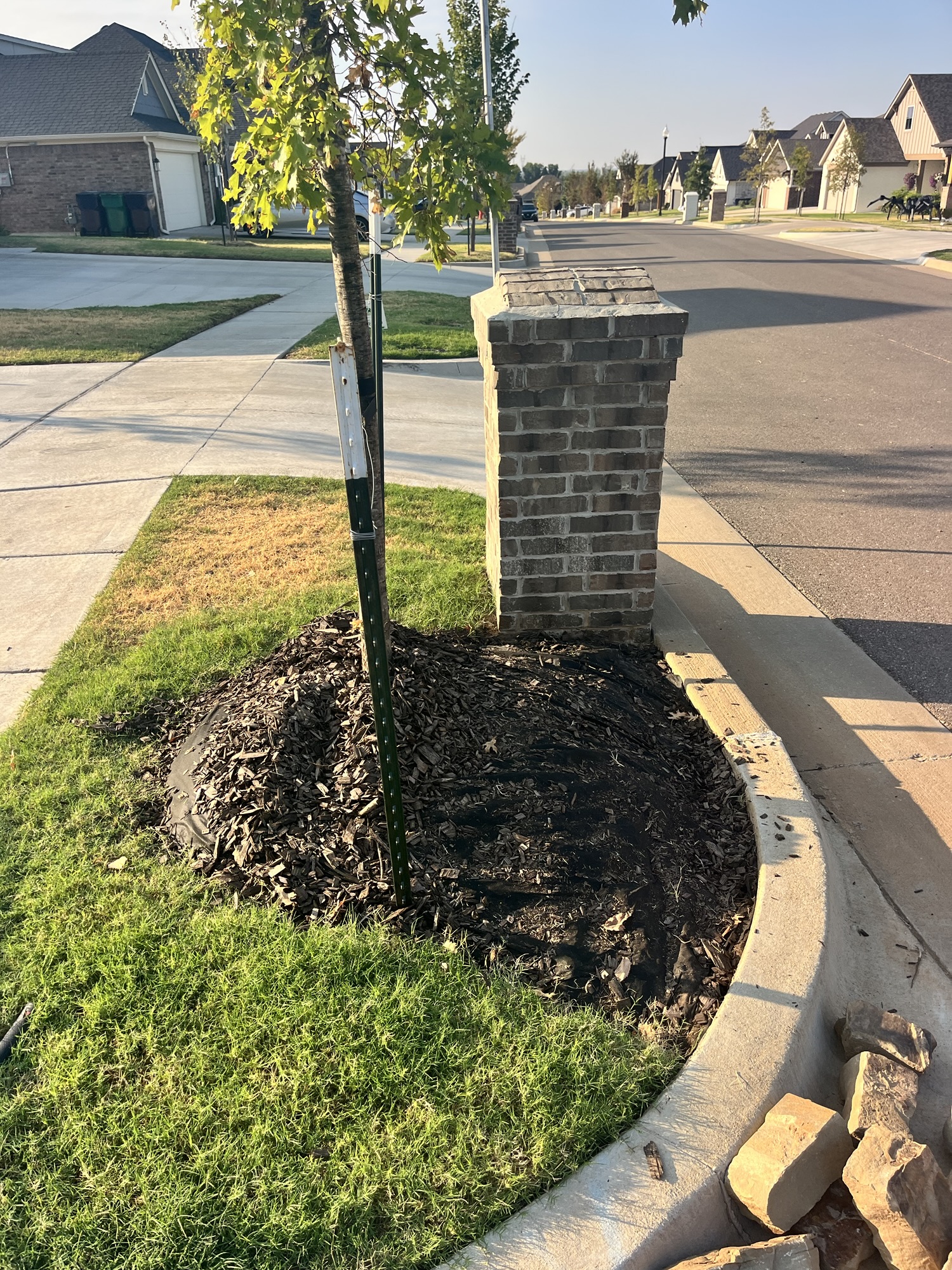
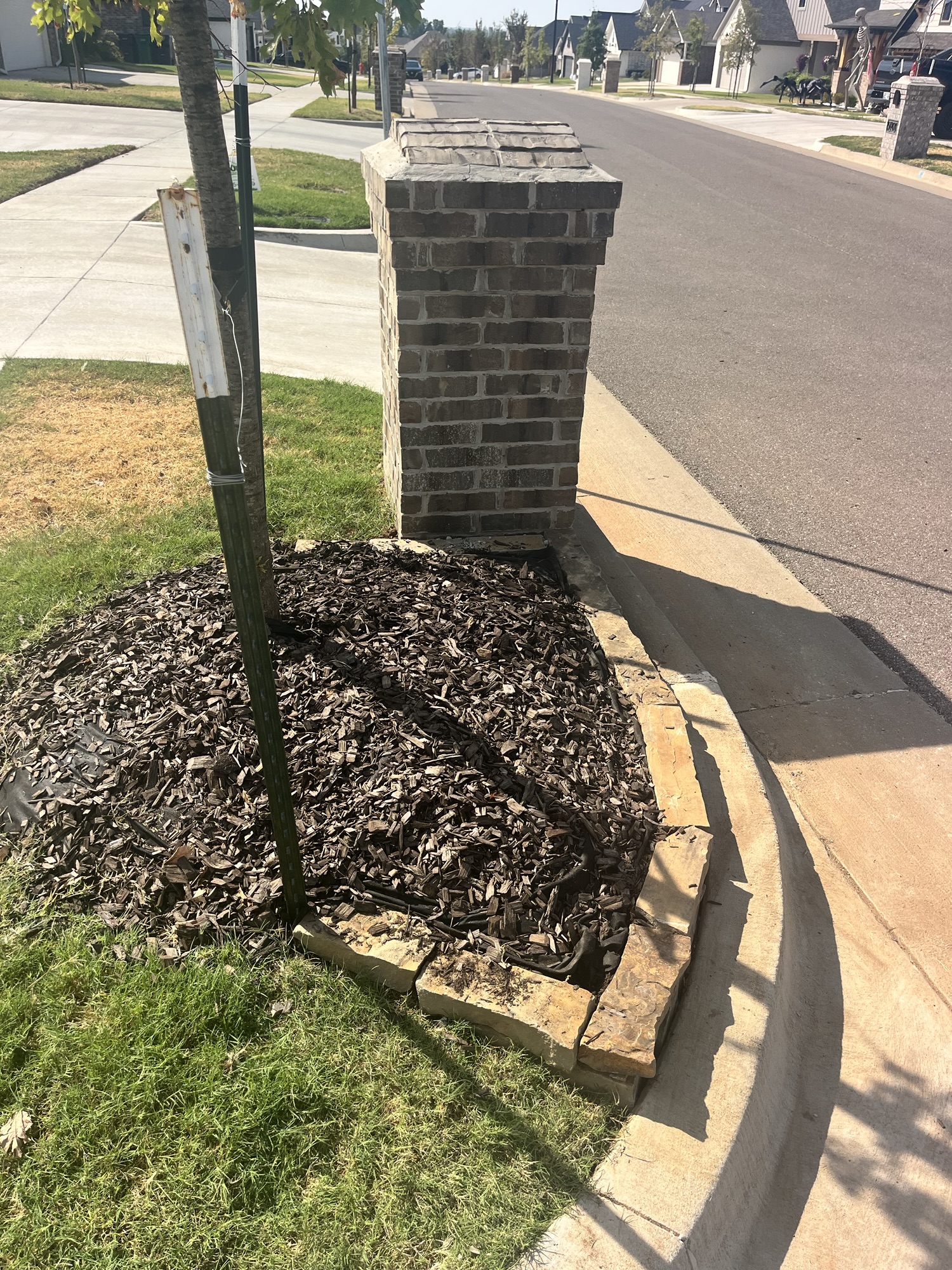
The rain and wind ganged up on the mulched trees too, undoing more of that “mulch glue” project than I want to think about. I had plans, actual plans, curved edges and everything. Then the weather rolled through and turned it into a lumpy suggestion of landscaping, and at some point there’s nothing left to do beyond the effort already spent. I said “uncle,” out loud, to nobody, and decided the mulch’s rebellion isn’t allowed to bother me again until mid-August.

Without an irrigation system, we’ve been watering constantly, and while we’re gone the job falls to the kids (my son and his wife) who live a street over. The instructions I gave them sound less like a plan and more like a riddle: if it rains plenty you can ease off, unless it’s also been brutally hot, in which case trust the ground to sort itself out anyway. Keep everything alive, don’t drown it, good luck. Explaining this out loud, I realized my only real qualification for any of it is owning a shovel.

All of that was just warm-up for the fireworks. Judy had come off a disappointing, rain-delayed show at Scissortail Park and wanted her real finale, so after watching as much of a delayed soccer game as we could stand, we went hunting for the one spot that might deliver it, fireworks pilgrims in search of the promised land. A packed grocery store parking lot looked promising, though it made no promises. We moved our sitting towel exactly once and settled for the best angle available. A drone show with patriotic shapes went first, then the fireworks started, framed nicely between two guys in lawn chairs who’d claimed the spot ahead of us. Fifteen minutes in, Judy turned and said, “This is the finale I wanted Friday night, but I got a dud instead.” Two separate fires had apparently thrown off the whole schedule that first night. When this show kept going past what felt like the ending, we took it as a gift, got up, and cleared the lot just as the real finale wrapped up behind us — no gridlock, no extended parking lot purgatory.

My relationship with fireworks comes down to one rule: if the drive home takes longer than the show, it counts against the whole evening. This time we got out early, Judy was next to me, and I called it “fine.” From me, that’s basically a standing ovation, and she knew it.

With fireworks behind us, the countdown to vacation officially starts. There are still the fake fears and the vague what-ifs that show up before every trip and never mean anything once we’re actually there. But somewhere past all that noise, there’s a good vacation waiting. Judy’s the one who keeps turning this pile of wind-flattened trash cans and rebellious mulch and questionable packing decisions into a story instead of a crisis. I just need to get out of my own way and let it happen. If I can’t manage that for myself, I’ll manage it for her.

Babysitting, Humidity, and a Balanced Ledger

I want to go on record that I volunteered for this. Nobody made me do anything. That will matter later.

My wife had been excited about the 4th of July Eve plans ever since she heard the OKC Philharmonic was playing a free concert at Scissortail Park with fireworks after. She heard “free concert and fireworks” and I heard “several thousand of your closest strangers, downtown parking, and a heat index designed by someone who hates you.”

The concert started at 8:30 and the fireworks at 9:30, which is great timing unless you live near a small human whose bedtime is 8:00ish. So I made an offer I considered safely hypothetical. I told Judy that since Ellie’s parents wouldn’t be able to enjoy the concert anyway, I could stay home with the baby.

I assumed this offer would be admired and declined, the way all noble offers are supposed to work. Instead, my daughter texted me that Mom said I’d watch Ellie if they went. My generosity had been converted into a signed contract before I’d even finished congratulating myself on it, and I wasn’t even consulted on the press release.

But my wife does what she does.

Here’s my honest accounting of what I skipped. It was going to be mid-90s during the day. The event was free, which is a polite way of saying the whole metro was invited. Parking downtown is always an adventure, and the dinner plan involved either hauling food in like pack mules or standing in a food truck line long enough to qualify for residency.

We’d done the orchestra-on-the-lawn thing plenty of times in Ohio, listening to the Columbus Symphony at Chemical Abstracts, and I knew that routine cold. I knew where to park, where to sit, and when to leave. This event offered me zero known variables and a forecast that guaranteed everyone around me would be operating at about 90% of their normal patience, myself included.

So while the family went downtown, I fed Ellie dinner and followed her around the house for less than an hour. Her exhaustion and her bedtime arrived at the same moment, which is the babysitting equivalent of hitting the lottery. Grandpa did not have to endure the big sad eyes, and I consider that the real fireworks show.

Then I watched soccer and debated whether I’d made a wise decision or simply confirmed my status as the family hermit. The jury stayed out overnight.

The next morning I got my redemption arc. I attended the parade in Edmond as the only male in our entire family delegation. My son passed, and my son-in-law passed. I alone carried the banner of masculine parade attendance, and I did it on one of the hottest mornings of the year, when my bed was right there offering a very compelling counterargument.

My daughter came along and admitted she couldn’t remember the last time she’d been to a parade. I understand that completely. It takes a certain amount of pride in your country to get out of bed on a morning you could sleep in, and I don’t count the 4th as a political event anyway. It’s a celebration every American should want to attend regardless of whatever Washington is currently doing to itself.

We arrived half an hour early, which earned us a seat that was worse than the canopy people’s and better than the stragglers’. In parade seating, as in life, you mostly aim for the middle of the pack and call it a win.

Some observations from the curb. Even at 9:00 in the morning, the sun means business, breezes should never be undersold, and humidity is a monster that needs to be slurped up by a cloud and relocated to a part of the country where I don’t live.

An hour is the correct length for a parade. Anything past that and the babies get restless, and I’m not going to pretend the old people weren’t doing the same math about beating the traffic.

You cannot have horses in a parade without a cleanup vehicle following them, which reminded me of a horse parade we attended near Delaware, Ohio, one of the biggest east of the Mississippi. People there drew chalk boxes on the street hoping a horse would leave its contribution inside their square. After a hundred horses go by, watching one do a #2 becomes genuine entertainment, and somewhere out there, a lucky winner was thrilled about manure.

The Shriners apparently brought every vehicle they own. Every float and car said “India Shriners,” which is the OKC chapter, and I did confirm that a Shriner is a Mason but a Mason isn’t necessarily a Shriner. I now know this permanently, whether I wanted to or not.

They did doughnuts in tiny cars and drove motorcycles in circles that slowly migrated up the route. They weren’t amazing, but they were entertaining, and this being our second year, they were exactly as entertaining as I remembered, which is its own kind of reliability.

An early highlight was a plumbing company float featuring Uncle Sam in a bathtub, either grateful to them for fixing his pipes or too lazy to walk the route. Based on what we could see, our Uncle was fully committed to the appearance of actually bathing, and I respect an actor who stays in character.

The expected inventory was all present. Three high school bands, fire trucks, police vehicles, a couple banks, politicians, beauty queens, and past grand marshals all baked in their own convertibles, waving hard enough to count as cardio.

My wife pointed out that the jazzercisers really had some energy. Their float came early in the route, and I suspect their jazziness declined as the temperature climbed, but they were giving us everything they had as they passed.

On the way home Judy wanted to stop at Sonic for a drink, an idea that was good in theory and then met parade traffic and a short-staffed Sonic that was losing its battle with the drive-thru. Fortunately, air conditioning can repair an attitude in about four minutes flat.

So that’s the ledger for the weekend. I skipped the concert on purpose, and I showed up for the parade on purpose, and I think the books balanced.

The truth underneath all of it is that Judy and I are getting closer to full retirement, which means a whole lot of years ahead of just the two of us deciding what we do with our days. I don’t want her dreading the thought of hanging with me every day, and I definitely don’t want her starting our upcoming trip wondering what kind of a boring guy she married.

Staying home with Ellie so her parents could have a night out was worth something. Standing in the heat while the Purple Heart veterans passed and the chairs emptied was worth more. The kids came over later for a cookout and homemade ice cream, and I’ll be there being adequately social, which for me is the sweet spot.

Judy knows what kind of guy she married. He complains about the humidity, skips the crowds when he can, and still gets out of bed for the parade, because some things deserve the sweat.

The Chaos Doesn’t Care That I’m Getting Better

After my Monday rebound on the health meter, I briefly believed I was proving my wife wrong. She’d been quietly predicting a longer recovery than I wanted to admit, and I was walking around like I’d just won the argument without actually saying, “I told you so.” She enjoys being right the way some people enjoy pickleball: casually, competitively, and with a suspicious amount of strategy. Fortunately, she decided a healthy husband was more valuable than a correct one, so she put on her “supportive spouse” face. If you ever meet her, please don’t let her know you know this. I need plausible deniability.

Feeling better meant I got to do normal‑human things again: I took my walk, hopped on a couple of Zoom calls, and tagged along with my daughter and granddaughter to the zoo. Six miles on a body that had been dragging for weeks. It felt like the comeback tour. I might have been insufferable for a few hours.

Tuesday had notes.

The good news was I slept through the night. The bad news was my energy evaporated before I could even decide what to do with it. Babysitting duty was coming later, so I chose the no‑walk option and pretended it was “strategic pacing” instead of “I can’t move.” I’d love to say I used the time wisely, but all I really accomplished was navigating the administrative obstacle course required to host hockey boys again in the fall. Background checks? Done. “USA Hockey Safe Sport” training? Also done—most of it aimed at people who actually see the boys in locker rooms. Apparently, I’m part of the extended safety net: the guy who hands out snacks and, if necessary, phone numbers for people who fix bigger problems.

Ellie arrived and we slid into our usual routine: constant snacking, nap avoidance, and me conserving enough energy for the playground run. On the walk there, she demanded frequent sips from my water bottle. I could refuse—I’ve been sick for weeks—but her parents aren’t particularly germ‑shy, and she’s been marinating in my personal germ broth for the same amount of time. Also, I’m terrible at telling her “no.” I know that’s a bad grandpa move. My current self‑diagnosis is long COVID, so odds are she already has better antibodies than I do.

At the park, a potential playmate was waiting. Her grandmother, Malinda—same name as my own grandmother, which earned me instant points—was already mid‑conversation with a woman walking her dog while her granddaughter tried to pet it. Once the dog walker escaped, Malinda turned her attention to me. Her grandma instincts were strong; she stayed half a step ahead of me to catch Ellie if she tripped. With my germ‑rattled brain and slow‑motion reflexes, I welcomed the backup.

Her granddaughter loved the slide, which meant Ellie needed to love the slide too. I lifted Ellie past the first giant step and let her instincts take over. The playground’s first landing was not designed for Andy‑sized humans, so I performed a sort of hunched shuffle that was heroic in spirit if not in appearance. Malinda warned me to keep my feet wide, so I wouldn’t go too fast. She claimed she once landed on her fanny. I’m not entirely sure I have a fanny, but I took her advice. She went first and absorbed most of the water on the slide, so I only got the “lightly damp and mildly undignified” version. Ellie and I survived two runs. The second one just required a deeper stoop and a quiet prayer.

Back home, we tackled lunch—the official one, not the Cheerios she treats as an emotional support snack—and then I followed her as she dismantled tissues and anything resembling organization. After a very dirty diaper where she “helped” spread the diaper cream, she finally went down for a nap. My wife suggested I do the same. Earplugs in, thunder shaking the house, I accepted the challenge.

An hour later I woke up thinking, “Why is it freezing in here?” The thermostat app swore nothing had changed, but the air said otherwise. I had that first quiet suspicion that the HVAC system had gone rogue. I did what any reasonable person does: ran through my standard “If I were an HVAC system trying to hide my misbehavior, how would I do it?” test. My final move was simple—cut the power. A rascal can’t rebel without electricity.

Not wanting to sleep in a house slowly turning into a meat locker, I called an HVAC company. I picked one with good ratings and an “& Sons” in the name. Maybe it’s marketing, but something in me trusts people who sound like they also attend each other’s Thanksgivings. The tech on the phone walked me through a few steps that matched my diagnosis, then added phrases like “lightning can do wonky things” and “sounds like a motherboard problem.” If it were a grandmother‑board problem, my wife would’ve solved it instantly—or at least acted like she could.

The technician came out the next morning. After an hour and a half of poking around, he had mixed news. He could rewire around the problem and get us running, and the part itself should be under warranty. He started on the workaround while I called the original installer to schedule the warranty visit. Their answer: “Sometime Monday, if we can fit you in, thirty‑minute notice.”

Vacation is in two weeks.

By the time I added up the labor for two technicians, we were approaching 75% of the cost of just replacing the motherboard outright and being done with it. So we went with the sure thing. Yes, it cost more. But I don’t have to spend the next two weeks playing thermostat man while the temperatures climb and the warranty visit exists in the mystical realm of “sometime Monday.”

My wife thought it was the right call. She was right.

She usually is.

Somewhere in there is the theme of this whole stretch of life: my health finally creeping in the right direction, while the rest of the universe keeps throwing toddlers, lightning, and circuit boards at me just to see what I’ll do. Apparently “feeling better” doesn’t come with less chaos. It just means I’m well enough to show up for it.

Andy: 1, Death by Sneezing: 0

I am the unfortunate one who is “it” today.
It with what? Cold, sinus infection, COVID, mystery crud with commitment issues—hard to say. Whatever it is, it picked me to carry it on Father’s Day. I’m not sure if this thing started two weeks ago or sometime back before our son’s wedding, but the headline is simple enough: I am sick on Father’s Day.

I won’t blame the sickness entirely for my lack of a blog post lately. It hasn’t helped, but it doesn’t deserve full credit. My stubbornness has played a strong supporting role, especially the part where I refuse to rest like a man my age who has, allegedly, earned the right to lie down without guilt. Instead, I’ve been spending my limited energy knocking items off the pre–vacation list: swapping Texas plates for Oklahoma plates, finally closing out a business that overstayed its welcome, babysitting through both scheduled and “guess who’s here” Ellie visits, and getting the house ready for the hockey boys we’re expecting again in the fall.

Written out, it doesn’t look like a heroic montage. It looks like paperwork, childcare, and laundry with extra steps. But when you layer those things over days where my body is operating on the “barely functioning” setting, I’m oddly proud of it. It’s not dramatic, but it’s the real shape of being Dad at this stage: still moving forward, even if I’m wheezing while I do it.

Last night, as we got into bed, my wife gave me a pep talk. At least, that’s what she thought it was. She caught something too—worse than mine, in her version of the story. My theory is we have the same bug, her symptoms just showed up in different costumes. Either way, what I received was the “the next few days of your life will be miserable” speech.

She used gentler, more reasonable words. What I heard was, “You aren’t as tough as me, but I’ll try to support you through the certain misery ahead.” She denied this, naturally. I reminded her that communication isn’t about what you say; it’s about what I hear. And what I heard sounded like a pretty unflattering movie trailer. We agreed to disagree and rolled over for yet another night with no goodnight kiss. Nothing says romance like marital plague protocols.

The funny part is that the night went better than her forecast. I took something for drainage, then waited to see whether it would help or if I was just participating in expensive wishful thinking. She had one coughing fit, so her suffering continues and, by extension, my predicted misery has apparently been extended by at least another day on principle. I blew my nose a few times, rolled from left to right more than usual, and then—somehow—actually slept. Morning showed up, and I felt more rested than her non-prophetic words had promised. For that one night at least, the scoreboard read: Andy 1, Death by Sneezing 0.

Possibly out of guilt, my wife turned the leftover half of a French loaf—the half that didn’t get turned into garlic bread—into French toast this morning. We reheated some sausage, sat down together, and had a real breakfast. We did not hold hands to pray over the food. At this point, I’m not sure how much difference hand-holding makes when we’re living in the same air and sharing every surface known to man. She put up such a strong “no goodnight kiss” boundary when she got sick, which would have been adorable if she hadn’t kissed me the night before my symptoms showed up. By then, the virus had already RSVP’d.

I’m no specialist in germ theory, but I’m fairly confident she’s enforcing a rulebook the viruses never agreed to follow. That said, the French toast was a satisfying touch. On a normal rough morning, “I’ll make the coffee” is about as extravagant as we get. Guilt offering or not, the extra effort landed.

We decided to skip church, too. On any other Sunday, that decision would have been straightforward: we’re sick, we stay home. On Father’s Day, it comes with a little extra twinge. On Mother’s Day, our church passes out “Her-She” candy bars. Hershey, with a wink. I can’t remember if the men get anything. Our big treat is the chance for the willing and able to sit up front in the choir area and help lead the singing. I skipped every practice, which technically should have disqualified me. But practices were optional, and my secret plan was to sneak in anyway and let my voice blend in with the other dads who also didn’t rehearse.

My voice still works. My conscience apparently works better. The close quarters up front started to look less like worship and more like the opening scene of a documentary called “Superspreader: The Tenor Section.” As much as I hated to miss the male bonding, staying home felt like the least selfish choice. I may have lost the joy of singing off-key with the guys, but somewhere a congregation is slightly healthier for my sacrifice.

Tonight’s dinner with the kids is still technically on, but it now carries an asterisk in all the group texts. We might cancel. We might rally. I hate even imagining not being there, but everyone else has earned the right to stay healthy, too. No one wants their Father’s Day dessert with a side of virus.

Whoever I end up seeing today—however upright or congested I am—I’m calling this Father’s Day a win. This year, we added a new daughter-in-law to the family. Our daughter is due late summer with twins. There are murmurs of permanence in the lives of our other two kids, the kind of quiet conversations that sound suspiciously like future weddings warming up in the wings.

Father’s Day has never really been about me, at least not in the way the cards suggest. It’s more of an annual status report on what’s happened over the past year and what seems to be growing underneath all the noise. The real takeaway isn’t “Look what I built.” It’s closer to, “Thank God my kids are out there choosing kind people to build a life with.”

I’d be thrilled to be a grandfather many times over. That’s no secret. But the part that actually feels like a report card on my parenting is simpler: they make decent choices; they care about the people around them; they’re building lives that look, for the most part, healthy and hopeful. My wife and I blurred plenty of roles over the years and improvised more than we’d admit, but the results walking around out there seem to speak for themselves.

On the low end of the scale, they graduated from college and pay their own bills. On the high end, they’re married or moving toward it, they’re happy—or at least earnestly trying to be—and grandkids are starting to appear as the bonus round I selfishly can’t wait to keep playing.

By next Father’s Day, I’ll get another snapshot of where everyone has landed on that spectrum. Maybe more weddings. Maybe more babies. Maybe more ordinary Tuesdays that quietly matter more than any of it. For now, I’m just glad to be here to take attendance. Healthy would’ve been nice. But present and accounted for, even with a box of tissues under my arm, feels like enough.

The Mercy Rule

I showed up at 8:15 for an 8:30 appointment with an empty stomach and low expectations.

That’s the deal with the annual physical—no breakfast, no coffee, and a brain running at about 60% of its usual speed. I don’t fast for spiritual reasons or wellness trends. I fast because my doctor needs clean blood numbers, and I comply like a slightly resentful teenager.

The elevator was out. I walked to the third floor instead of the second, which meant the man behind me who was more upset about the elevator than I was slipped ahead at check-in. He seemed like he needed the win more than I did.

The waiting room was generous with its space. Nobody had to sit near anyone else, which suited me fine. I have a tendency to turn my extrovert on in public, and once it’s on, it doesn’t always know when to stop. A stranger in a medical waiting room has things going on under the surface you can’t see. So I did what everyone else did. I stared at my phone like it owed me money.

They called me back second. First was the scale. Shoes weigh something. They used to account for that—a five-pound mercy rule, basically. Someone decided to eliminate it, and now the number just stares back at you. My BMI is what it is. A functional chubby-ness has carried me this far, and I’m not prepared to be dramatic about it.

The nurse ran through the standard questions, and I gave her honest answers, which felt like a small personal victory. At some point in your early-60s, you develop a reasonable ability to answer medical questions without editorializing.

Blood pressure: 122/68. I nearly fell out of the chair. When I give blood, which I do regularly and usually after at least one cup of coffee, that number climbs. This time I forgot the cuff was coming, which meant my body didn’t have time to manufacture anxiety about the reading. I’m holding onto this number like a trophy.

My doctor has a name that sounds like something you’d order at a tea shop, which I mean affectionately. He is good on the dialogue but a little lean on checking the reflexes. We had a brief negotiation about who was holding the microphone during my update, but we found a rhythm. He touched me exactly four times with the stethoscope. Four. I don’t know what number I was expecting, but it felt light for something called a physical.

I was hoping he’d look in my ears so I could mention my shower routine, but I suppose that joke keeps until next year.


Upstairs for the blood draw, which is where the morning got interesting.

The waiting room was full. The promo board cycling between health tips and marketing content included a note that visually impaired patients should swipe with three fingers on the check-in screen. I sat with that for a moment

A woman came in with a four-year-old and a seven-month-old. I’d guessed three on the older one, which she politely corrected. There was one open chair next to me and one across the room. I asked if she’d like me to move so she could have two together. The baby was still in that loading-personality-coming-soon phase, but watching the mom manage both kids with one hand free reminded me we were all young and exhausted once.

One woman checked in, glanced at the open seat next to me, and immediately chose to lean against the wall until a chair opened on the far side of the room. I took no offense. If I had to choose between sitting next to a guy who might start a conversation and leaning against a wall, I might avoid me too.

When my wife Judy was still waiting for her draw and I was heading out, I gave her a fist bump. “See you at home, dear.”

A few people smiled. One older woman held onto it a second longer than the rest. Maybe she had a husband she adored. Maybe she missed one. Either way, she smiled like the gesture meant something, and that was worth the empty stomach.


Monday, I’ll get the call about the results. Neither my doctor nor I is expecting anything alarming.

If I could write my own prescription, it would just say: daily laughter, refills unlimited. I’m pretty good at finding it. Family close, health stable, nothing urgent on the horizon.

Lucky doesn’t quite cover it, but it’s the closest word I’ve got.

The Remarkable Adventures of an Unremarkable Morning

There’s a meeting at 9:00, and I have a small window before I put on my babysitting hat. So naturally, I ate a bagel, drank two cups of coffee, and chugged the last of a quart of orange juice left over from last month’s wedding shower — because apparently cleaning out a refrigerator is a noble act of self-sacrifice rather than the most basic form of adulting imaginable. Nobody asked me to buy a quart of orange juice for a party. My wife bought the party supplies. My conscience would bother me no matter who did the shopping. I drank it anyway.

Then I scurried outside.

The 4.5-mile walk had to be done before 9:00. I already knew my meeting was starting at 9:05, minimum. Knowing he’ll be five minutes late has never once made me log into Zoom five minutes late. I don’t understand myself either.

The first obstacle was a forklift hauling lumber for one of the new houses going up on the other side of the neighborhood. Our side is the older part — mature trees, individual mailboxes, the kind of street where the mail carrier drives from box to box. The new side has consolidated mailboxes, one big cluster where you can knock out six streets in three minutes. Efficient. I’d be a disaster at it. The numbers would run together, and anything less than five mistakes per day would be a good day. Not my problem, because I don’t have that job, and this is why.

The forklift detour wasn’t much of a detour. What it actually cost me was thirty seconds of my audiobook, paused while a yard crew fired up a leaf blower to redistribute freshly mown clippings to somewhere other than the driveway. Somewhere, presumably, but I didn’t stay to confirm.

The wildlife situation required judgment calls I’m not sure I was qualified to make.

Oklahoma is flat. When it rains, the water has to go somewhere, and at the neighborhood level, that means toads and turtles living in the drainage areas, occasionally making ill-fated decisions about road crossings. I saw a baby turtle sitting dead center in the street. I saw a large turtle just off the curb. I stood there for a moment, fully aware that a decent person would move them.

I did not move them.

I have a thing — a completely reasonable and well-established thing — about touching animals that could carry germs that might somehow, in some freak sequence of events, find their way into my mouth or my granddaughters. I know how that sounds. But I grew up watching a turtle crawl under a sliding wooden door and disappear, and something in me was permanently shaped by that. The turtles were on their own. I am sorry. I walked faster so I didn’t have to see what happened next.

Four rabbits in the park. No squirrels — our trees aren’t mature enough yet for what I can only describe as “tree rats” to fully establish themselves. They have earned my dislike, and I won’t apologize. .

At the park, a young woman was doing sprint intervals on the soccer field within the walking path. I’d seen her the other day running full laps, and today she was going hard, then walking, then going hard again. I admire that kind of self-motivation — the kind where you show up and push yourself with no external pressure, just because. I don’t have that relationship with exercise. I walk because it’s a good time to listen to books and because I’d feel guilty if I didn’t. It’s not suffering, but it’s not ambition either.

The highlight of the entire walk — maybe the entire week — was watching the OKIE811 utility locator do his job.

I assumed these guys walked around spraying paint on the ground and bending over to stick the little flags in. Reasonable assumption. That is not what this man was doing. He was marking a gas line (yellow flags, per the Universal Utility Color Code), and when he finished the spray, he reached into his vest, pulled out a flag, and with one smooth downward flick of his wrist sent it arcing through the air so that it landed perfectly upright in the ground.

I applauded him inside my head as I tried not to stare.

I have no idea if the rest of his flags that day went in on the first try. Maybe he fumbled twenty of them the moment I turned the corner. But what I saw was a man who had mastered something so specific and so useless outside of his exact job that it became a kind of art. I thought about how many thousands of flags you’d have to throw before your wrist just knew the angle. Nobody is going to put that on a highlight reel. And I loved it.

The last stop was my son’s house. He and his bride are finishing up their honeymoon, so I let myself in through the garage, removed my shoes at the door (they have an Asian household — shoes stay outside; I assume the mounted cameras confirm compliance), and found all their houseplants arranged in the kitchen sink with their vines draped across the drying racks in what I can only describe as a botanical hostage situation. I’d like to think my daughter-in-law staged this deliberately before they left. The alternative — that the plants organized themselves — would require a conversation I’m not ready for.

I turned on the spray nozzle and gave them all a drink. They may be sun-deprived, but they weren’t dying of thirst on my watch. Small win.


The walk takes a little over an hour. I listen to my book, I sweat a little, I make no meaningful impact on local turtle populations. By most measures, it’s an unremarkable way to spend a morning.

But I keep showing up for it. A forklift reroutes me, a utility worker throws a flag like a tiny javelin, a turtle makes a bad decision at an intersection I hope he saw the other side of — and somehow that’s enough. More than enough. I’m not sure when ordinary started feeling like something worth paying attention to, but at some point it did, and I think that might be the whole thing. You live long enough, you stop waiting for remarkable, and you start just noticing what’s actually there.

That’s a pretty good trade.

The Giraffe Named Ellie

I arrived at my daughter’s house at 8:30 with the “Ellie-approved” stroller and no ambiguity about whether I wanted to be there. The night before, I’d said, “Are we going to see Ellie tomorrow?” She said, “Do you want to go to the zoo?” As if Ellie’s presence made the venue negotiable.

She drove. She recently quit her job to become “Mom of One with a 2 girl upgrade before October arrives,” and OKC morning highways are somehow the least chaotic part of her current life. I had no objection. I rarely fight someone else doing the driving — and when she stays at the speed limit, the car tracking app on my phone briefly believes I’m a responsible adult. When my wife drives, that same app apparently concludes I’ve been drag racing on the interstate.

At the gate, my daughter bought the membership: two adults and as many kids under 3 as you can account for at any given moment. The zoo seemed optimistic about that number.


I should be upfront about something. I’m not a zoo person.

I understand what zoos do. Children see animals, become fascinated with the natural world, and some of them eventually become veterinarians. I applaud all of that from a comfortable distance. I grew up near the Columbus Zoo, which is a good one. I don’t remember how many times I went as a child, and I think that tells you something.

What semi-retirement gives you, though, is availability — and decent enough eyesight to qualify as a tag-team partner for a daughter willing to tolerate your company. I’ve done this before. I’ve taken children to zoos before. I’ve come close to accidentally enrolling a son in the chimpanzee exhibit on a Mother’s Day in the early 2000s, and I only exaggerate that story a little.

My approach to animals is efficient. I look at a wildebeest, think something like, “That is a genuinely unfortunate head,” and move on. God apparently designed these creatures with total confidence. My wife and I cannot pick a paint color for a hallway without four trips to the hardware store, so the idea of just deciding to make a wildebeest is beyond me.


One thing the OKC Zoo has over the Columbus Zoo: at Columbus, the exhibits have large sweeping names like “North America.” At this zoo, they have a section called “Oklahoma,” which appears to contain enough variety to cover most of the continent. Having lived here awhile, I’ve stopped being surprised by that.


Ellie’s highlights were specific and, if you blinked, easy to miss.

The Cheerios in her stroller cup holders were the main event. She’d glance at passing animals, then return to the serious work of gumming the oat circles into paste. The animals were ambient. The Cheerios were the feature.

The flamingos got real attention — they were close to the path and practically fluorescent, and her eyes tracked them for a genuine stretch. For reference, thirty seconds of eye contact from a one-year-old is the equivalent of a standing ovation.

The dinosaur at the entrance barely registered on the way in. On the way out, she leaned back against my chest, looked straight up at the brontosaurus (I think), and smiled at him. I don’t know what she thought it was. The dinosaur didn’t smile back, but she held up her end of the exchange.

In my world, large reptiles are always “him.” I know this isn’t scientifically airtight, but I’ve been consistent about it for decades, and I’m not changing now.


The whole trip ran about three hours. My daughter ran the operation; I pushed the stroller and kept the headcount accurate, both of which I managed.

One of the giraffes is named Ellie. I’d go back just to point at her and say, “Look, there’s the other one.”

Our Ellie fell asleep before we made it out of the parking lot. When babysitting, she can convince me sleep is a hobby she hasn’t fully committed to yet — she’ll run the living room like she’s training for something and still have energy when I don’t. But three hours of flamingos and Cheerios and stroller traffic, and she was gone before I finished a sentence.

That’s why we took our own kids to the zoo, too. It’s not something you say out loud at the time, but everyone knows it. The animals are fine. The nap is the whole point.

The Washer That Tried Its Best

We are about to hit the two-week mark without a washer, and I want to be very clear: this is not a hardship narrative. Nobody needs to organize anything. We have children nearby who are more than happy to earn nonspecific parental approval points by letting us use their machines. We’ve already run three loads through our daughter’s washer, and she now leads the family leaderboard by a comfortable margin. She doesn’t know what the points are for, and we don’t know how she’ll cash them in, but somewhere there’s a spreadsheet that leans slightly in her favor.

The real story here is that our washer lasted as long as it did.

When the hockey boys arrived in the fall, the washer was—by all available evidence—normal. Quiet. Cooperative. Not auditioning for the role of bucking bronco at a cowboy bar. But somewhere along the way, it decided it wanted more out of life. A second act. And once it committed to that dream, it went all in on every single load. Jeans, towels, delicates—didn’t matter. If it went in, it came out after six rounds of thump-thump-thump-thump-thump.

Naturally, we blamed the hockey boys. “Those boys are trying to cram two loads into one,” we said, as if we were seasoned forensic laundry experts. It felt good to believe. It gave the chaos a villain.

We tried all the classic home remedies. Lean it forward. Drop it back. Hope gravity and optimism would realign the drum. I didn’t research any of this, of course. Judy probably talked to someone on the phone and then got ambushed by several reels on the subject—assuming she’d already burned through the videos of toddlers missing t-ball pitches and animals losing their minds over garden hoses.

We did warn the hockey boys about overloading. They nodded, then returned to their natural habitat: upstairs, headphones on, video games absorbing all earthly sound. They would drop a load in and disappear, completely insulated from the consequences. Meanwhile, if we forgot to close the laundry room door, it sounded like something had gotten in and wanted out badly. Six cycles of thump-thump-thump-thump-thump will make you question how many seconds you have left.

The more unsettling development was our own adaptation. When our son came over and heard it, he’d stare at us in genuine disbelief—two people sitting calmly on the couch, our only concession to the impending structural failure being a single, unhurried click up on the TV volume. The machine had become part of the family. Not a pleasant family member. More like the uncle who starts every holiday dinner with, “Now don’t get mad, but…”

By the time the season wound down, we knew. Post-hockey-boy life was going to include a new washer.

So for date night, we went to Home Depot. Chick-fil-A handled dinner. The appliance aisle handled the foreboding. Judy walked the lineup like a judge at a talent show, hoping for something that would at least surprise her. Instead: a lot of meh and buttons that seemed to require a minor in engineering. She was disappointed. I was, if I’m being honest, strangely relieved.

We made the decision that only people our age can make with a straight face: let the monster keep haunting its corner of the first floor as long as it was able.

We’re hoping for a repeat of the air fryer situation. We didn’t realize how dead the old one was until the new one showed up—and suddenly reheating a slice of pizza no longer took longer than ordering a fresh delivery. That was a genuine revelation. The bar for the new washer isn’t high: mostly we just want it to sound like an appliance and not an escape attempt.

The hockey boys will probably still find ways to provoke it next season, but we have the summer to recalibrate our noise expectations before we slide back into the familiar soundtrack of domestic chaos.

Now we just need the thing to actually arrive. Home Depot already pushed it back a week, and someone’s delicates are starting to form geological layers in the laundry basket. The text says Tuesday, 2–6 pm—which in delivery company language translates to “remain in your home and abandon all hope of making plans.”

We don’t do mountains of laundry around here. The cooking has scaled back, and the dishwasher spends most of its life wondering if it still has a purpose. The machines in this house are creeping toward semi-retirement, honestly.

At our age, you stop pretending everything is fine when something is clearly broken. You don’t make a fuss. You just sigh, adjust, and text your kids to see who’s home and whose washer is open for hosting. We’ve already built all the character we need. Now we’re mostly interested in functioning appliances.

I don’t call it lazy. I call it convenience-inclined.

Is that so wrong?

The Watch Situation

I used to wear a watch constantly. Not because I was punctual—there has never been enough evidence to support that theory. I simply liked having one.

I graduated through the full evolutionary timeline of affordable timepieces. Started with a small analog watch, moved into the glamorous future of digital, first an LED display that required pressing a button to reveal the time as though it were protecting classified information, then an LCD that felt like owning technology stolen from NASA.

Then came the stopwatch phase. I spent an embarrassing amount of childhood trying to stop it on an exact second rather than some renegade hundredth.

I’d hit the button. 10.13.

Again. 9.87.

Again. 12.04.

Eventually, after several minutes of concentrated effort, I’d finally land on exactly 10.00 and feel a sense of accomplishment wildly disproportionate to the achievement. Kids today have streaming services and unlimited entertainment. We had a stopwatch and imagination.

Somewhere after that I developed opinions about watches—never more than one at a time, but I cycled through several of them, each paired with a twist-o-flex band engineered specifically to remove arm hair one follicle at a time. Whether my sweat was corrosive enough to slay the watches before the bands finished the job is a question science has yet to answer. Either way, eventually something inside me snapped. Or maybe it was the band. Watches and I were done.

Was it the sweat under the band? The vanity of not wanting tan lines beyond my already well-established farmer’s tan? The first cell phone clipped to my belt like a middle-aged Batman? The details are lost. The important part is I quit wearing watches and never looked back.

Until I did.

More than half my kids walk around with smartwatches now, closing rings and tracking steps like it’s a competitive sport. I started thinking, I walk a lot. Maybe I should get one so I can receive official electronic confirmation that I am, in fact, moving. Without verification, how does anyone really know?

I also get accused—regularly and fairly—of being impossible to shop for. Apparently my habit of buying things immediately rather than letting them sit on a wish list for six months makes me “difficult.” So I thought: Father’s Day. Put the watch on the list. Prove I’m giftable. I even imagined everyone pitching in together, which was generous of me to consider.

Let’s be honest about what Father’s Day actually looks like at my stage of life. A phone call. Maybe a card. One gift from the daughter who has benefited most from my extensive unpaid babysitting services. The new daughter-in-law might nudge my son toward participation, but I keep expectations low. Low expectations are the bubble wrap of emotional life.

Before officially adding it to the list, I consulted my wife and my local daughter. Their responses were different and spiritually identical.

My daughter used to be in the “sure, Dad, get a watch” camp. Then she spent more time with me and quietly switched parties. Her verdict: “I think you’d get way too much information off that kind of watch. I don’t recommend it.” She wasn’t talking about technology. She was talking about me. Give me access to heart rate data, sleep scores, and recovery metrics, and within a month I’ll be convinced something has moved from green to light green and we need to discuss it with someone. That vote went straight into the “no” column.

My wife came at it from a different angle. She reminded me I’d already broken up with watches once and expressed full confidence I’d abandon this one in about two months. Not hope—confidence. Nothing says supportive spouse like betting against you in your own fitness journey.

So that’s that. My Father’s Day list is empty again, and I’m back to trusting my phone to track my steps and shame me into movement. I already get a little unhinged when I miss my daily goals. If you want me to work hard, make me compete against myself—I hate letting myself down, and I do it often enough that the stakes feel real.

With summer heat arriving, I’ve shifted my walks to 7-9 a.m. I don’t avoid all the misery, but it keeps my wife from worrying I’ll become a cautionary tale on the side of the road. And I get to start the day knowing I’ve given this body another reason to keep going.

Some technologies improve with age. I am doing my best to be one of them.

Wedding Mode

I am charming.

Not year-round. Catch me on a random Tuesday in February and there’s a decent chance I’m avoiding eye contact at the grocery store while pretending to study soup labels. But give me a wedding where one of my children is getting married, and I transform into a socially acceptable version of myself.

This weekend, the charm was dripping off me like sweat at an outdoor reception in Oklahoma.

Conversations? I could talk to anybody about anything. Politics, brisket temperatures, whether people under thirty still know how to parallel park—I’m in. People walked away convinced I was fully engaged the entire time. I probably was mostly engaged, but these varicose veins keep me from being fully ambistrous.

Yes, I looked it up. “Ambistrous” means being able to do something equally well sitting or standing. My brain can socialize indefinitely. My legs start filing formal complaints with management somewhere around minute thirty-seven. (Or was it those dress shoes?)

Normally I wait for people to find me. This weekend I was seeking them out, starting conversations on purpose, approaching strangers with something resembling confidence. This goes against every part of my being on most days—and, honestly, most years—of my life. But give me a wedding where I’m acquiring a son- or daughter-in-law and something in me rises to the occasion and says, “Today we will appear emotionally healthy.”

DIY wedding? Doesn’t shake me much. My wife wisely withholds enough of the plan to prevent me from offering what I call efficiency analysis and what others might call being difficult. If I don’t know the plan, I can’t optimize the plan. That’s marriage wisdom right there. And if my legs begin filing formal grievances, I wave the “functioning mutant” flag, find a couch, and cheer everybody on from a seated position.

Some people mistake this charm for pure sincerity. That’s not exactly right. It’s more like a carefully managed energy budget—burning today’s charm on credit from future me. The curtain can get thin. Those who know me know exactly which questions drop it.

But there’s a rare category of person who reverses the drain entirely. Someone who returns sass properly. Not cruelty—playful disrespect wrapped in affection. The kind that says, “I see you and I think you can handle this.” Conversational ping-pong. A way of saying, please don’t make me carry this alone.

One of the best surprises of the weekend was meeting Valerie. Not her real name, but it fits. In our family, she became known as the cougar. That’s the story as I received it, and I’m not fact-checking it now.

The origin goes back ten-plus years, when our son worked at the Chick-fil-A in the mall. Valerie was a mall walker who stopped afterward for a Dr Pepper. She wasn’t built for small talk. She’d ask whoever took her order something real—a question with follow-up potential. Our son passed her screening. If he didn’t know an answer, he’d look it up and have it ready next time. And knowing my son, there was some mild smart-mouth commentary included free of charge. All those years of me aggravating him had finally become an investment portfolio.

They stayed in touch. He visited her. She and her husband visited him during their three-year camper-living stretch. Phone calls when visits weren’t possible. This weekend, they came to his wedding.

What got me was how naturally she fit. She sparred with my other kids, my brother, and me like she’d known us for years. Nobody played it safe. Sometimes she’d get me with a good line and I’d fire one right back. You could see exactly why they kept up with each other—she’s the kind of person who refuses to let you be mediocre. If you weren’t going to show up as a real human, she’d have moved on to the next register.

But our son made an impression. A durable one. He earned that relationship by being fully himself, over and over, starting at a fast food counter before he was old enough to vote.

Forty-eight hours ago I had never met this woman. Now I’m a little jealous my son ended up with his own cougar grandma.

Me? Still charming, in short bursts. But I’m old enough to know I’m past the window for acquiring one of my own.

I’ll just keep the one I married.