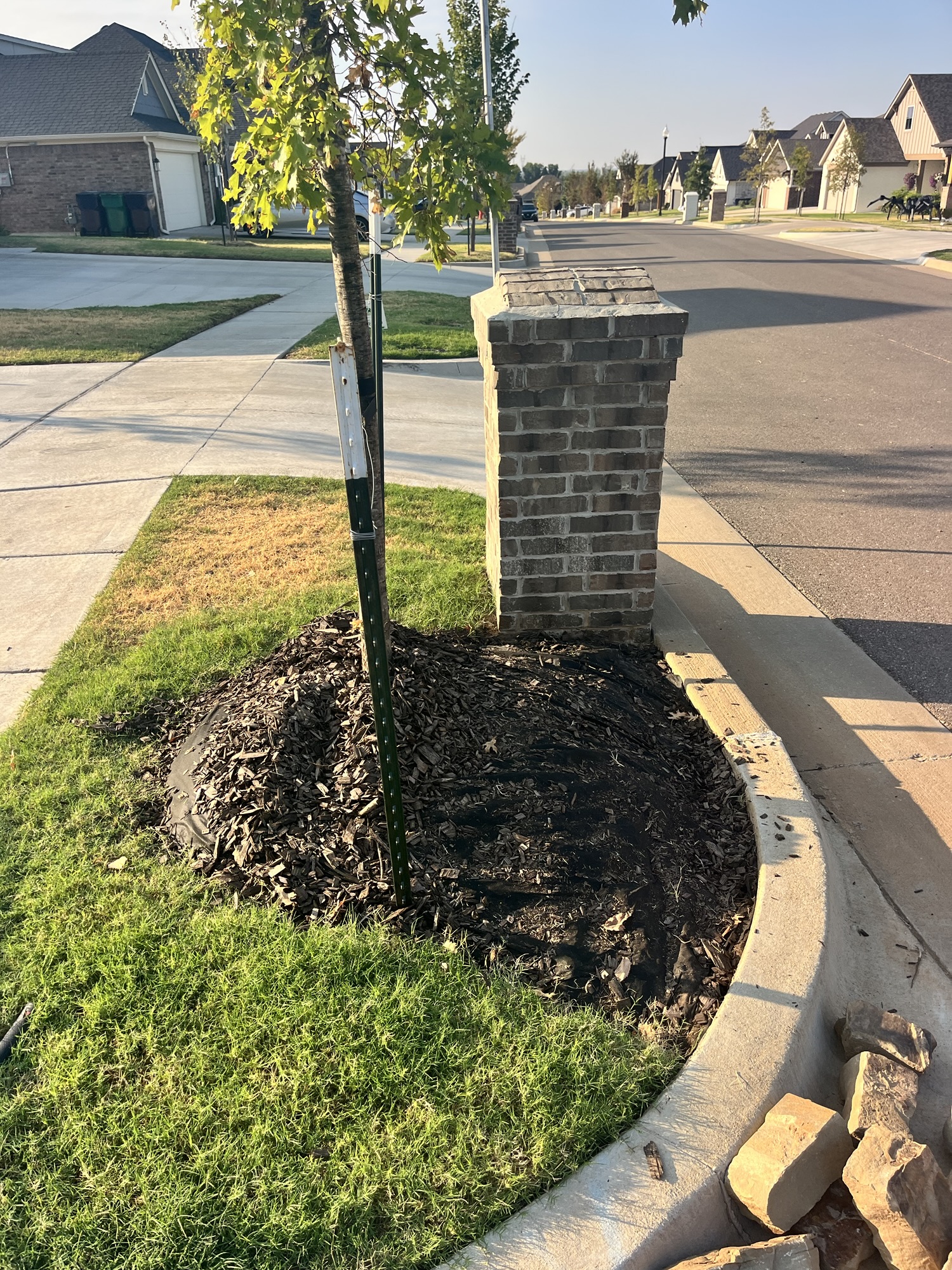
A few weeks ago, I stumbled across the sales guy for our subdivision—the guy who “lives” in the model home. We hadn’t seen each other in a while, so we had a few things to catch up on. I needled him about whether the stuff he was throwing into the dumpster from the back of his truck was all work-related or whether he had snuck some junk from home into the truck purge. He admitted there may have been a little of both.
Whether the guilt was the reason he told me about a pallet of free stone sitting on the corner or whether it was just friendship, I didn’t think I was a candidate to use any of it. We did our typical fist bump and headed our separate ways—me on foot and him in his truck.
I mentioned the stone to my son as a possible landscaping option, but he couldn’t figure out how to use it either. Then I realized there might actually be a project for me. With almost no rain over the past few months, I had nearly forgotten about my ongoing “mulch sliding into the street” problem around our newly planted tree. I was confident it would eventually rain again, because apparently God has a sense of humor when it comes to landscaping.
I picked through the pile and found some ugly stones along with a bunch that were a pretty consistent thickness. I was still a little timid about reacquiring my old “stone whisperer” skills, so I went to Home Depot for a few supplies. Up to this point, the project had cost me exactly $0.
I needed gravel, topsoil and a stone hammer. The first two were easy. The hammer was more complicated. I looked through their entire inventory of hammers, searching for something with a square striking head and a backside that looked like a normal hammer, except without the part designed to pull nails. I wanted something solid that could chip a stone if reshaping became necessary.
Their selection was inadequate, but I found one that offered a few advantages over the hammers I already owned. And honestly, since the project was still practically free, the hammer was going to be my trophy of accomplishment.
At checkout, I mentioned the project to the clerk. He showed me where I could order the proper stone hammer through the service desk and handed me his business card. He later explained that he wasn’t blatantly soliciting customers for his side business while on the Home Depot clock, but he wasn’t opposed to it if the situation could be justified.
I admired the entrepreneurial spirit.
With the supplies in my trunk and my new hammer arriving by UPS the next day, I could see the project coming together.
Because I was still a little timid about my stonework, I texted the Home Depot guy about helping me. He had told me he was a stone mason, and I figured if I was going to do this, I might as well have someone around who actually knew what he was doing. I also mentioned the “stone stash” that would be his for the picking.
He came over the next day and said he could easily help. I offered to ride with him to the pile, but the pictures I had sent him apparently gave him enough confidence to find it himself.
Everything was fine until I got the text a few minutes later.
The supervisor had spotted him picking through the stones and thought he was some guy trying to scrounge free material without authorization.
Technically, he was.
He just had a better story.
I sent a few texts to my subdivision sales guy—the same guy who had originally told me about the stone—and got the situation cleaned up. It turned out nobody cared who took the stone. They just wanted the stone to disappear.
So the great stone heist was really just a communication problem.
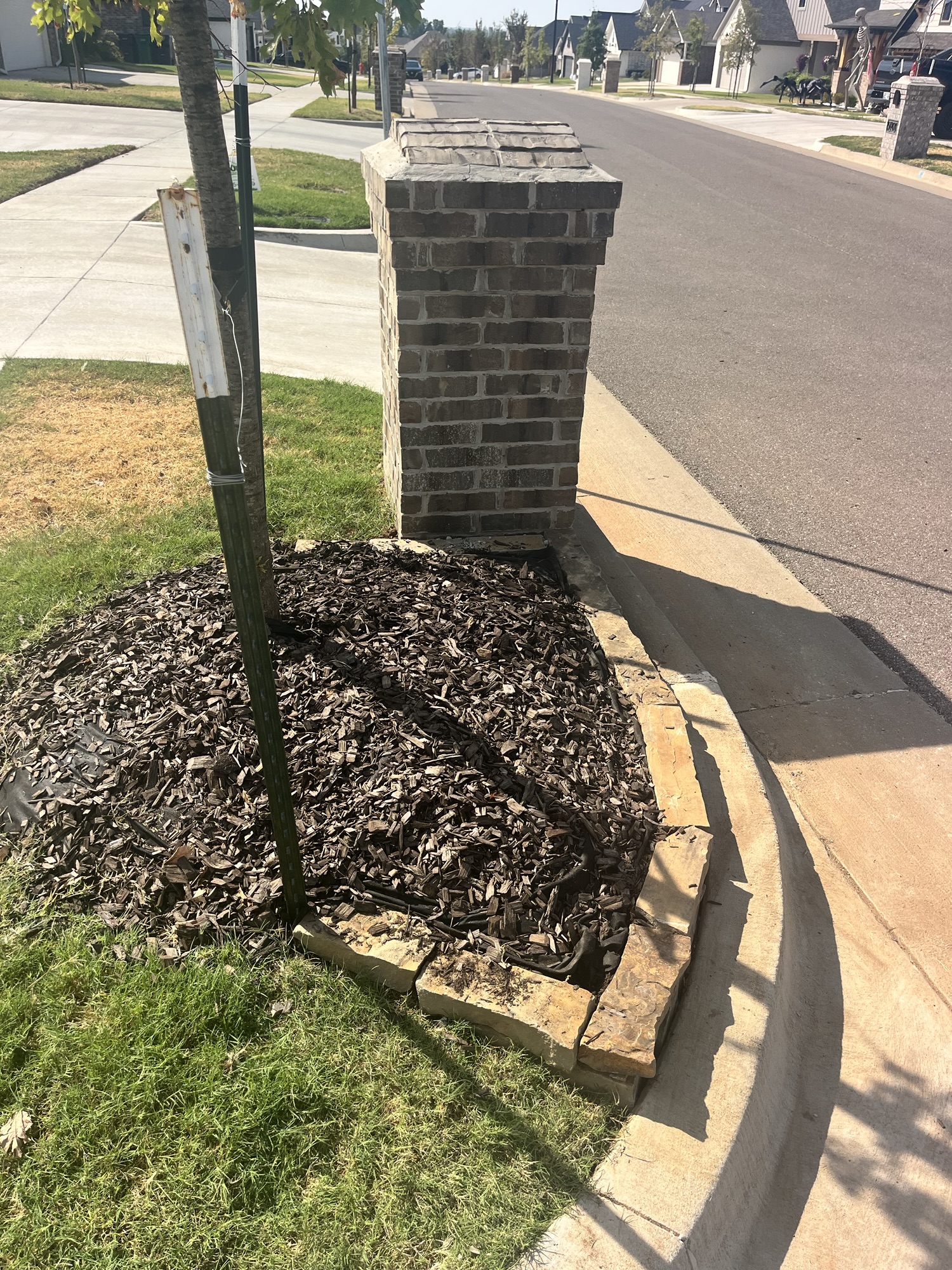
This morning, my stone mason showed up promptly at 9:30. I had done some pre-work. I pulled back the weed mat and made sure the stones I had already hauled home were visible. Comparing the thickness of one stone to another was important, which was exactly the kind of highly technical responsibility I was hoping to avoid.
Our first goal was getting the wall about four inches above the curb. Once we established that height, we put the thickest stones on the bottom. That required some digging to get everything level, although the trick was not digging any deeper than necessary.
Once the foundation was established, we started on the cap—the top course of the wall. The stone mason ran his hand over the stones, feeling for changes in thickness. I pulled out my long level, because apparently I still had something to contribute.
The biggest challenge was keeping the cracks from lining up. The stones needed to overlap like Legos, with each piece connected to two or more others. That way, the wall gets stronger as it goes up instead of becoming a very expensive pile of rocks.
The final product wasn’t perfect, but considering my trophy hammer was the most expensive part of the project, I was happy.
My stone mason gave me a quote on replacing the plastic retaining wall in my flower beds. Then I went with him to pick a few more stones while providing cover from any supervisors who might need to boost their egos. Eventually, he headed out.
I cleaned up the area and made my wife put her shoes on so I could brag about the job we had done.
In my younger years, I would happily spend a few days doing a project that someone else could have completed in a few hours. Those days are behind me. I’m now perfectly happy to pay someone a fair wage to help preserve two things: my body and my self-esteem.
Preserving my body is obvious. The self-esteem part is a little more complicated. My wife has strong opinions about how certain things around the house should be done. I haven’t mowed the grass myself in years, and I have discovered that outsourcing a job comes with a valuable side benefit. If I don’t build the stone wall, any criticism Judy may have about the wall doesn’t stick to me. “Boy, I wish he had done a better job,” I can say, and suddenly, I’m on the same team.
I’m not afraid of the work. I’ve simply reached an age where I appreciate the strategic value of having someone else hold the hammer when the final inspection takes place. A good contractor saves you time. A great contractor gives you someone to blame.
A scapegoat for hire is a cheap version of marital bliss.
Yes, you can quote me on that one.

