As the weather transitions into fall, we can turn the a/c off and open the windows. In the south, this is something we look forward to. Summer has its place, but it can keep its temperatures. When the windows can open, we open them at my house. I especially like to open the window right next to my desk. Because the springs in the window are not working correctly, I have to prop up the window with a small vitamin bottle or something similar. In my excitement last week, I decided the small bit of air the bottle would allow in was not enough. I grabbed the first thing available–an sample item that was the size of a piece of paper but much more rigid. After playing with the best way to prop up the window, I left my desk and den and let them breathe in the fresh air.
You can imagine how surprised I was when I sat back down in my chair. The window was closed, and the tool I used to prop up the window had plunged into the screen. The screen was not a new screen. It put up NO resistance. The tear in the screen was in the bottom right corner. The hole was about 11″ wide by 8″ tall. The screen was still connected, but it was no longer eligible for my window in its present condition. Mosquitoes and what-not could not avoid the temptation.
After watching some videos on how to change out a screen, I went to Home Depot to get a screen-changing kit. I knew the kit would need to have a rolling tool to work the screen into the frame. And the video told me I would need “spleen”. I had no idea what size spleen to purchase. I stared down the headlights of the vehicle threatening to run me over in the Home Depot aisle before finding a product called ScreenMend. As I reviewed the packaging, a memory surfaced about a product on SharkTank. There was no mention of the product appearing on SharkTank, but it clearly could solve my problem.
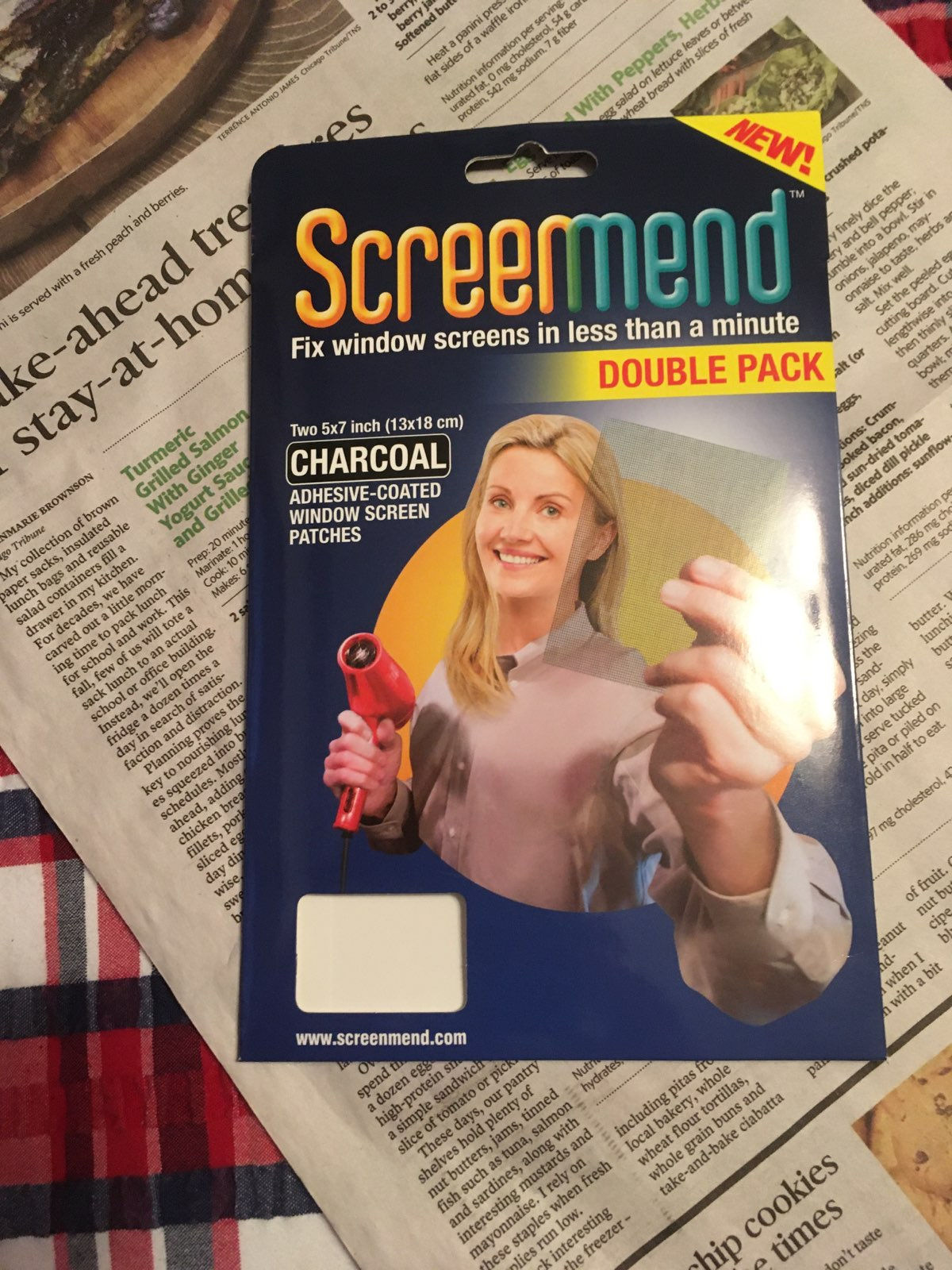

Fortunately, it could solve my problem. The product was easily trim-able. I cut one sheet into 3 strips. I placed one of them over the injury. I applied it in the opposite direction of a Band-Aid. My goal was to allow as much as possible of the tear to be covered by one strip. (A Band-Aid does not want any of the sticky parts on the injury. These strips worked more like a butterfly bandage) One side of the sheets had a small amount of meltable plastic on it. If that side of the strip was against the torn screen and a hairdryer was used, it would melt the undercoating enough to allow the healing to begin. Using multiple strips and some overlapping, the screen emerged as functional, but still slightly disfigured. If the operation was plastic surgery, the patient would need to go under the knife a few more times.
In conclusion, I would absolutely use the product again. It was a time and money-saver. It reminded me to “respect the screen.” Screaming is optional, but it won’t make the screen whole.
 Walking Down Life's Road With Andy